






What's Happening?
Kelly Campagna, operator of Adventures with Kelly: Home Early Education Center in Barre, Vermont, is expanding her family child care program thanks to a 'Make Way for Kids' Infant and Toddler Capacity Building Grant. Campagna, who became a registered
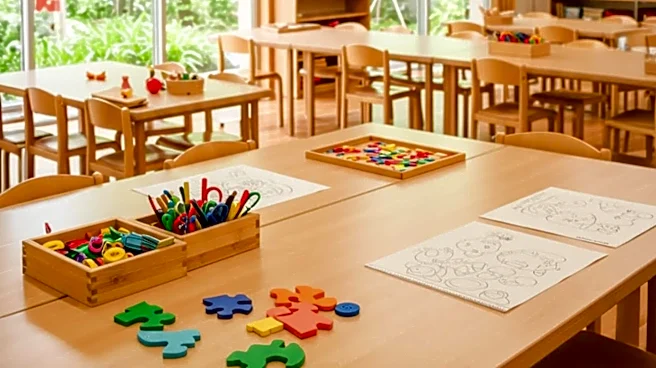
family child care provider on August 26, will use the funding to prepare her facility to care for two infants, one child aged two or older, and two school-age children. The grant specifically covers the costs of essential infant care equipment, developmentally appropriate educational materials, and shelving. This investment aims to create an engaging environment for babies to explore while keeping older children stimulated. Campagna emphasized that while registration was a crucial first step, acquiring the right equipment is vital for providing infant care and expanding her services to more families in the Barre area. This initiative is part of a broader effort across Vermont, where 17 child care programs are receiving a total of $338,034 in grants to launch new programs or expand existing ones, creating an estimated 110 new child care spaces statewide, including 42 for infants and 68 for toddlers.
Why It's Important?
The expansion of Kelly Campagna's child care program in Barre, supported by the 'Make Way for Kids' grant, is significant for addressing the critical shortage of child care options, particularly for infants and toddlers, in Vermont. The availability of quality child care directly impacts the workforce, as parents, especially mothers, often face barriers to employment or career advancement without reliable care for their children. By increasing the number of available child care slots, this grant helps alleviate the burden on families, allowing parents to participate more fully in the economy. Furthermore, investing in early childhood education infrastructure supports the healthy development of young children, providing them with stimulating environments crucial for cognitive and social growth. The 'Make Way for Kids' program, funded by the Vermont Department for Children and Families Child Development Division and administered by First Children's Finance Vermont, demonstrates a strategic public-private partnership aimed at strengthening the state's child care ecosystem and supporting local economies.
What's Next?
With the grant funding secured, Kelly Campagna will proceed with purchasing and installing the necessary infant care equipment, developmentally appropriate materials, and shelving to prepare her facility for the increased capacity. This will enable her to begin serving additional families in the Barre area, specifically accommodating two infants, one child aged two or older, and two school-age children. Across Vermont, the 17 programs that received this round of 'Make Way for Kids' grants will collectively work towards bringing an estimated 110 new child care spaces online. This includes 42 infant spaces and 68 toddler spaces, which will gradually become available to families in seven different counties. The ongoing administration of these grants by First Children's Finance Vermont suggests continued efforts to support child care providers in opening and expanding their services, indicating a sustained focus on addressing the state's child care needs through practical financial assistance for equipment and setup costs.
Beyond the Headlines
The 'Make Way for Kids' grant program, exemplified by Kelly Campagna's expansion in Barre, highlights a broader societal challenge and a strategic approach to addressing it: the economic and social imperative of accessible, high-quality child care. Beyond simply providing a place for children during working hours, these programs are foundational to community well-being and economic stability. The investment in 'safe-sleep equipment' and 'developmentally appropriate materials' underscores a commitment to quality, recognizing that early childhood experiences profoundly shape future educational and life outcomes. This initiative also reflects a growing understanding that child care is not merely a private family matter but a critical piece of public infrastructure, akin to roads or schools, requiring public investment. The success of such programs could serve as a model for other regions grappling with similar child care deserts, demonstrating how targeted grants can empower individual providers to meet community needs and contribute to a more robust local economy and healthier developmental outcomes for children.