



What's Happening?
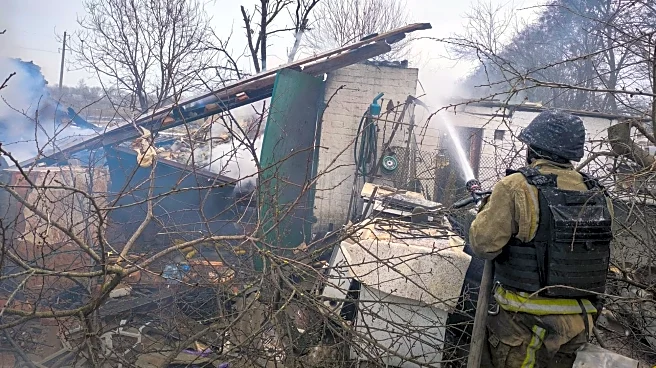
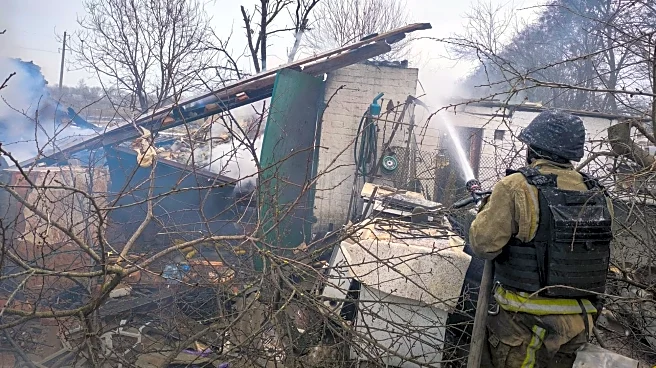
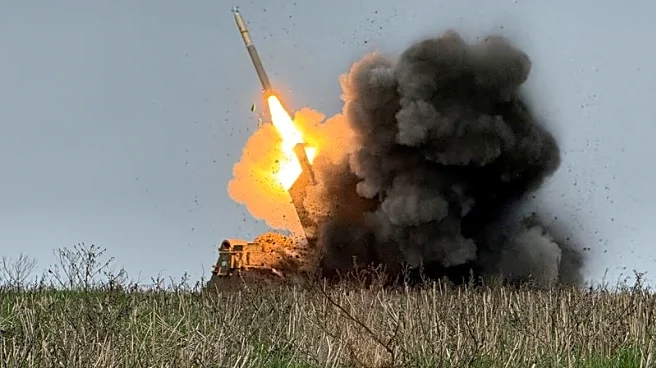
Delegations from Russia and Ukraine have convened in Geneva for US-brokered peace talks, marking nearly four years since Russia's full-scale invasion of Ukraine. The discussions, mediated by US President Trump's envoy Steve Witkoff and Jared Kushner,
are set against a backdrop of ongoing conflict and territorial disputes. Russia demands Ukraine cede control of the eastern Donbas region, while Ukraine seeks security guarantees. The talks are expected to be challenging, with both sides holding firm on key issues. The presence of military chiefs from the US, Russia, and Ukraine suggests discussions on ceasefire monitoring and implementation.
Why It's Important?
The Geneva talks are crucial as they represent a significant diplomatic effort to resolve Europe's largest conflict since World War II. The outcome could impact regional stability and international relations, particularly between the US, Russia, and Ukraine. A successful negotiation could lead to a ceasefire and potentially end the war, which has resulted in significant human and economic costs. However, the entrenched positions of both parties and the complexity of the issues at hand, such as territorial control and security guarantees, pose significant challenges to reaching a resolution.
What's Next?
The talks are scheduled to continue, with both sides expected to engage in further discussions. The involvement of military leaders indicates that practical measures for ceasefire and peace implementation are on the agenda. The international community, particularly the US, will likely continue to play a mediating role, with potential implications for future diplomatic and military strategies in the region. The outcome of these talks could influence future US foreign policy and its approach to international conflicts.