









What's Happening?
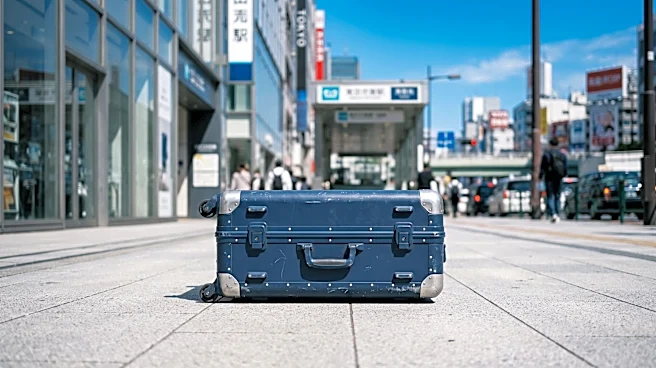
Toshima ward in Tokyo is preparing to introduce penalties for the illegal dumping of suitcases by tourists. This measure comes in response to a significant increase in abandoned luggage, with approximately 290 cases reported in the ward in 2025. Officials
suspect that tourists are leaving old suitcases behind after purchasing new ones in Japan, either to make room for souvenirs or to avoid airline baggage fees. The problem is particularly prevalent around Ikebukuro station, an area with a high concentration of hotels and private holiday rentals. The ward plans to enact an ordinance by the end of March 2027, with implementation beginning in April. This issue is not isolated to Toshima, as Tokyo recorded about 4,600 found suitcases in 2025, and major airports like Narita and Kansai International are also experiencing a rise in unclaimed luggage.
Why It's Important?
This development is important for U.S. tourists and the travel industry as it highlights a growing challenge in popular international destinations. For American travelers, it underscores the need to be aware of and adhere to local waste disposal regulations, as violations could lead to significant fines or even imprisonment under Japan's waste-disposal law. For U.S. airlines and travel agencies, this situation may necessitate clearer communication to customers regarding baggage policies and responsible waste disposal practices in destination countries. The issue reflects the broader impact of increased tourism on local communities and infrastructure, prompting authorities to implement stricter measures. It also signals a potential shift in how destinations manage the environmental and logistical challenges posed by a surge in international visitors.
What's Next?
Toshima ward will proceed with enacting its ordinance by March 2027 and implementing it in April. This will likely involve public awareness campaigns targeting tourists and collaboration with accommodation providers to inform guests about proper waste disposal. Other Japanese cities and wards experiencing similar issues may follow suit, potentially leading to a nationwide effort to curb luggage abandonment. Authorities may also explore further partnerships with private companies to offer convenient and affordable solutions for disposing of unwanted luggage. The long-term success of these measures will depend on effective enforcement and the cooperation of tourists. The situation could also prompt airlines to review and potentially adjust their baggage policies to mitigate the incentive for tourists to abandon luggage.
Beyond the Headlines
The issue of abandoned luggage in Japan reflects a deeper tension between the economic benefits of tourism and the environmental and social costs borne by local communities. It highlights the challenges of managing waste in an era of mass tourism and the need for more sustainable travel practices. Ethically, it raises questions about traveler responsibility and respect for local customs and laws. The problem also underscores the cultural differences in waste management, as Japan has stringent rules compared to many other countries. This situation could lead to innovations in travel logistics, such as more accessible and affordable luggage disposal services or even circular economy initiatives where discarded items are repurposed. Ultimately, it calls for a more conscious approach to travel, where visitors are encouraged to minimize their environmental footprint and contribute positively to the communities they visit.