



What's Happening?
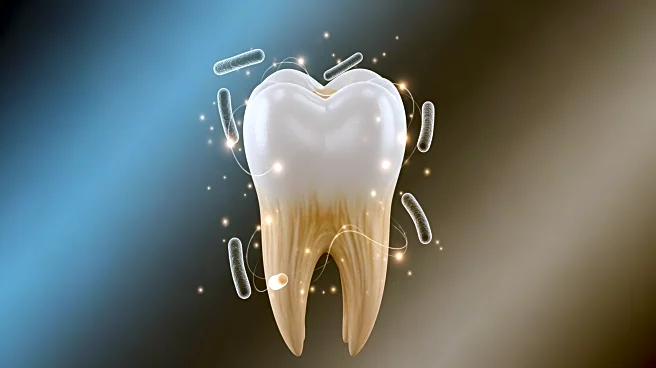
Recent studies have suggested a potential link between gum disease and Alzheimer's disease, with researchers identifying the bacterium Porphyromonas gingivalis in the brains of deceased Alzheimer's patients. This bacterium, known for causing chronic periodontitis,
was found to produce toxic enzymes called gingipains, which correlate with Alzheimer's markers such as tau protein and ubiquitin. The presence of these enzymes in individuals who had not been diagnosed with Alzheimer's suggests that gum disease could be an early factor in the disease's development. A compound named COR388 has shown promise in reducing bacterial load and amyloid-beta production in mice, indicating a potential therapeutic pathway.
Why It's Important?
This research could significantly impact the understanding and treatment of Alzheimer's disease, a leading cause of death in the U.S. If gum disease is confirmed as a contributing factor, it could lead to new preventive strategies focusing on oral health. This would shift some focus from traditional risk factors like physical inactivity and obesity to include dental care as a modifiable risk factor. The findings could also spur the development of new treatments targeting the bacterial infection, potentially slowing or preventing the progression of Alzheimer's.
What's Next?
Further research is needed to confirm the causative role of P. gingivalis in Alzheimer's disease. Clinical trials involving the compound COR388 and other potential treatments will be crucial in determining their efficacy in humans. The scientific community remains cautiously optimistic, and ongoing studies will aim to solidify the connection between oral health and Alzheimer's, potentially leading to new guidelines for disease prevention.