
What's Happening?
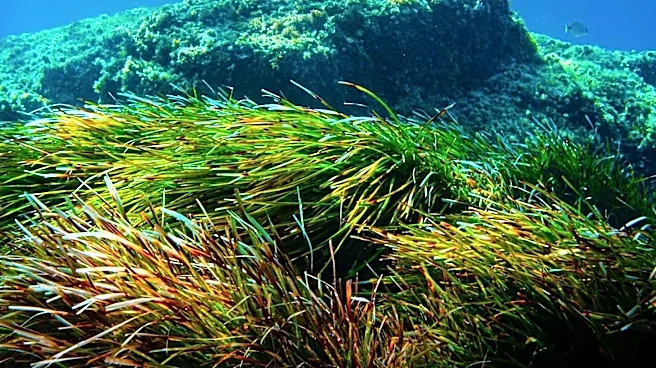
The Bahamas has officially launched its Blue Carbon Programme, an initiative aimed at leveraging the country's extensive marine ecosystems, particularly its vast seagrass meadows, for environmental protection,
climate finance, and national development. Prime Minister Davis highlighted that the Bahamas, despite its minimal contribution to global greenhouse gas emissions, faces significant climate pressures. The program seeks to shift the narrative from the Bahamas being a victim of climate change to a leader in climate solutions. This involves mapping and scientifically assessing the carbon sequestration capabilities of its seagrass, which were discovered to be far more extensive than previously known, partly due to tracking studies of sharks. The government has committed $25 million to the initial phase of this national effort, which includes scientific baseline studies, mapping, fieldwork, and carbon inventory development. The program is underpinned by the Carbon Credit Trading Act, 2022, and the Climate Change and Carbon Market Initiatives Act, 2022, establishing a legal framework for carbon markets and Article 6 cooperation under the Paris Agreement.
Why It's Important?
This initiative is significant as it positions a small island nation at the forefront of innovative climate finance and conservation strategies. By quantifying the carbon sequestration potential of its blue carbon ecosystems, the Bahamas aims to participate in international carbon markets, generating revenue that can be reinvested into national resilience and sustainable development. This approach offers a model for other ocean states, particularly those vulnerable to climate change, to transform their natural assets into economic opportunities while contributing to global climate goals. The program emphasizes national sovereignty over these marine resources, ensuring that the benefits serve the long-term interests of the Bahamian people. It also highlights the critical role of robust scientific research and legal frameworks in establishing credible, high-integrity mitigation outcomes, which are essential for gaining the confidence of international partners and investors. The program's success could demonstrate a viable pathway for developing nations to address climate challenges and economic development simultaneously.
What's Next?
The Bahamas Blue Carbon Programme will continue its scientific work, including detailed mapping, field verification, and sampling, to establish a comprehensive national scientific baseline. This data will be integrated into an enhanced national greenhouse gas inventory, with the expectation that it will confirm the Bahamas removes more greenhouse gases than it emits. Upon completion and technical validation, this will position the Bahamas to offer high-integrity internationally transferred mitigation outcomes (ITMOs) to the global community. The government is actively seeking substantive Article 6 discussions with partner governments and inviting patient capital, scientific and technical cooperation, and long-term investment from development partners. The program also aims to build a new generation of Bahamian professionals in marine science and environmental studies to ensure long-term stewardship of these resources. The econometric model commissioned will help direct capital towards interventions that yield the strongest environmental and developmental outcomes, with ongoing measurement, reporting, and verification to demonstrate results.
Beyond the Headlines
The Bahamas' Blue Carbon Programme represents a profound shift in how vulnerable nations can engage with climate change, moving beyond a narrative of victimhood to one of proactive leadership and resource stewardship. It underscores the intrinsic value of natural ecosystems, not just for biodiversity, but as critical components of global climate regulation and economic stability. The program's emphasis on national sovereignty and the development of local scientific expertise challenges traditional power dynamics in international climate negotiations, advocating for country-owned solutions. Furthermore, the story of how protecting sharks led to the discovery of vast seagrass meadows highlights the interconnectedness of ecosystems and the often-unforeseen benefits of conservation efforts. This initiative could inspire a broader re-evaluation of natural capital in national accounting and international finance, fostering a more equitable and effective global response to climate change.