






What's Happening?
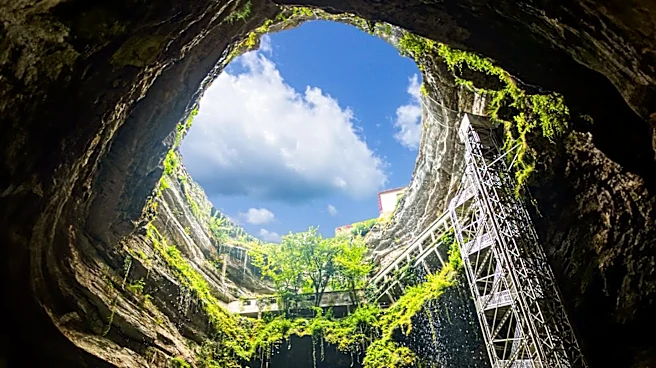
Thrihnukagigur, a dormant volcano located approximately 12 miles (20 km) from Reykjavik, Iceland, is the only volcano globally where the public can descend into its emptied magma chamber via an elevator. Visitors experience a 120-meter (394 feet) drop
into a vast chamber measuring roughly 50 by 65 meters (164 by 213 feet), with walls displaying bronze, indigo, and sulfur yellow hues. Unlike most volcanoes where magma solidifies after an eruption, Thrihnukagigur's interior remained hollow. A 2022 study published in the journal Volcanica by Michael Hudak, Maureen Feineman, Peter LaFemina, Halldór Geirsson, and Samuele Agostini clarified that visitors are entering a cave excavated by magma within a volcanic cone, rather than the deep magma reservoir itself. The volcano formed about 3,500 years ago during a fissure eruption, and its unique open interior is still not fully understood by geologists.
Why It's Important?
The accessibility of Thrihnukagigur offers a unique educational and scientific opportunity, allowing direct observation of volcanic interiors that are typically inaccessible. This provides invaluable insights into geological processes, such as magma drainage and cave formation within volcanic structures. For the U.S. scientific community, particularly volcanologists and geologists, this site serves as a natural laboratory for studying volcanic phenomena and can inform research on dormant volcanoes within U.S. territories. The tourism aspect also highlights the potential for geotourism, which can stimulate local economies while promoting geological awareness and conservation. Understanding why this particular volcano remained open could have implications for predicting the behavior of other volcanic systems globally, including those in the U.S. Pacific Northwest or Hawaii.
What's Next?
Thrihnukagigur continues to operate as a unique tourist attraction, with tours running seasonally. Scientific research into the volcano's unique geological characteristics is expected to continue, aiming to fully explain why its interior remained hollow. The Reykjanes peninsula, where Thrihnukagigur is located, has seen renewed volcanic activity since March 2021, with 12 eruptions recorded up to August 2025. This ongoing activity in the broader region may prompt further studies into the interconnectedness of volcanic systems and their long-term behavior. The site may also inspire similar initiatives in other geologically significant areas, potentially leading to new forms of educational tourism and scientific exploration.
Beyond the Headlines
The Thrihnukagigur experience transcends mere tourism, offering a profound connection to Earth's geological power and history. The vibrant colors within the chamber, attributed to mineral deposits and microorganisms, highlight the complex interplay of geology and biology in extreme environments. The site also touches upon cultural dimensions, with Icelandic traditions linking local rock formations to 'huldufólk' or 'hidden people,' adding a layer of folklore to the natural wonder. This blend of science, tourism, and cultural heritage underscores the multifaceted value of such unique geological sites. The ability to physically enter a volcano's 'heart' provides a visceral understanding of geological time and processes, fostering a deeper appreciation for the planet's dynamic nature and the importance of preserving such natural marvels for future generations.