



What's Happening?
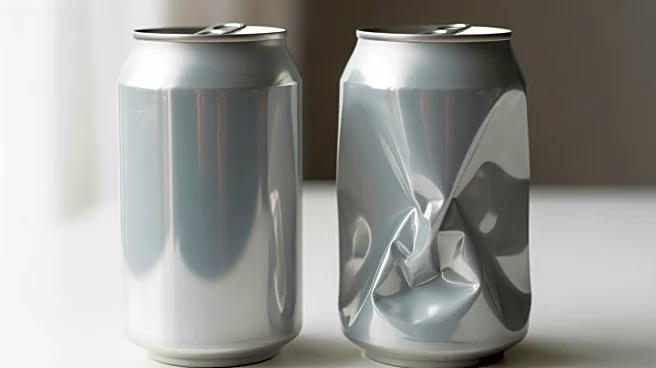
Recycling facilities have issued guidance against the common practice of crushing soda cans before recycling. The misconception that crushing cans saves space and aids recycling is counterproductive, as it disrupts the sorting process at recycling plants.
These facilities rely on the shape of cans to identify and sort them correctly. When cans are flattened, they can be misidentified, leading to potential contamination of recyclable materials. Additionally, it is crucial to rinse cans before recycling to prevent contamination from leftover food or liquids, which can render entire batches of recyclables unusable. The guidance also includes tips on handling lids and labels, emphasizing that while paper labels on metal cans do not need to be removed, they should be taken off plastic recyclables.
Why It's Important?
This guidance is significant as it addresses a widespread recycling myth that could undermine the efficiency of recycling programs. By ensuring that cans are not crushed and are properly cleaned, recycling facilities can operate more effectively, reducing waste and improving the quality of recycled materials. This has broader implications for environmental sustainability, as efficient recycling processes contribute to reduced landfill use and resource conservation. The advice also highlights the importance of public awareness and education in recycling practices, which can lead to more effective community participation in environmental conservation efforts.
What's Next?
Recycling facilities may increase efforts to educate the public on proper recycling practices, potentially through community outreach programs or informational campaigns. This could involve collaboration with local governments and environmental organizations to disseminate accurate recycling information. Additionally, facilities might explore technological advancements in sorting machinery to better handle variations in recyclable materials. Public compliance with these guidelines could lead to improved recycling rates and reduced contamination, ultimately supporting broader environmental goals.