
What's Happening?
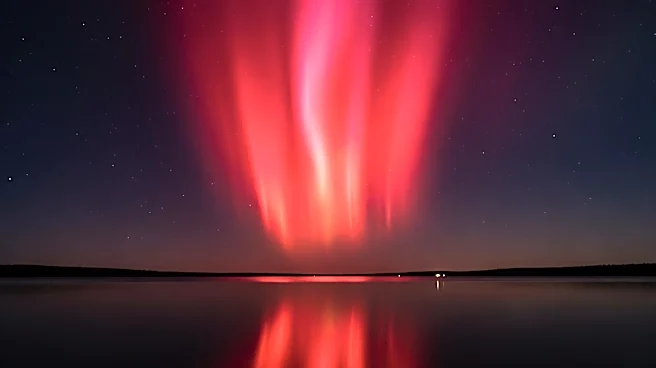
Researchers from Hokkaido University and the Okinawa Institute of Science and Technology have observed rare red auroras above Japan, extending 500 to 800 kilometers above Earth's surface. These auroras,
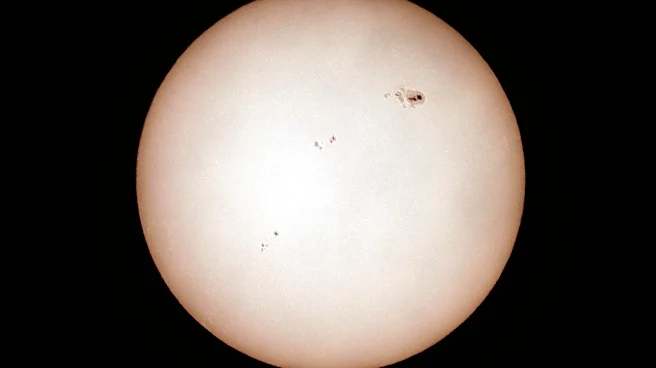
typically seen near polar regions, were recorded during moderate geomagnetic storms, challenging previous understandings of auroral altitudes. The study suggests that these storms may be stronger than conventional indices indicate, as dense solar wind streams compress Earth's magnetosphere, causing the upper atmosphere to expand and push auroras to higher altitudes.
Why It's Important?
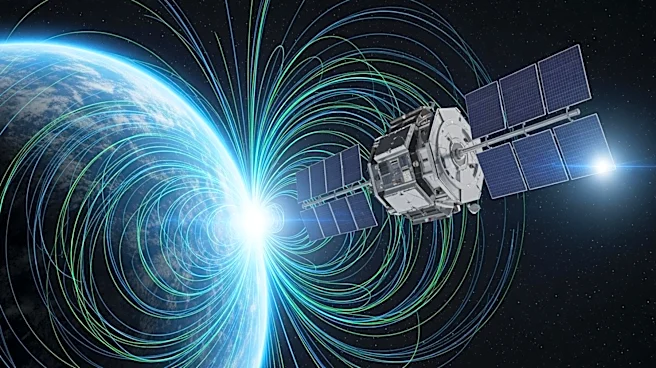
The findings have significant implications for satellite operations. As Earth's upper atmosphere heats and expands, satellites in low Earth orbit experience increased atmospheric drag, potentially altering their trajectories. Understanding these effects is crucial as the number of satellites grows, impacting space weather forecasting and satellite safety. The study also highlights the importance of citizen science, as observations from skywatchers across Japan provided valuable data for analyzing these rare auroral events.
What's Next?
Further research is needed to understand the full impact of these high-altitude auroras on satellite operations and space weather forecasting. Scientists may continue to study similar auroral events to determine if they are common during moderate geomagnetic storms. This could lead to improved models for predicting space weather and its effects on satellite systems, ensuring safer and more reliable satellite operations in the future.