
What's Happening?
Fleet Readiness Center East (FRCE) has successfully delivered its first non-flight-critical metal additive manufactured aircraft parts to the U.S. Navy fleet. This marks a significant advancement in aircraft sustainment,
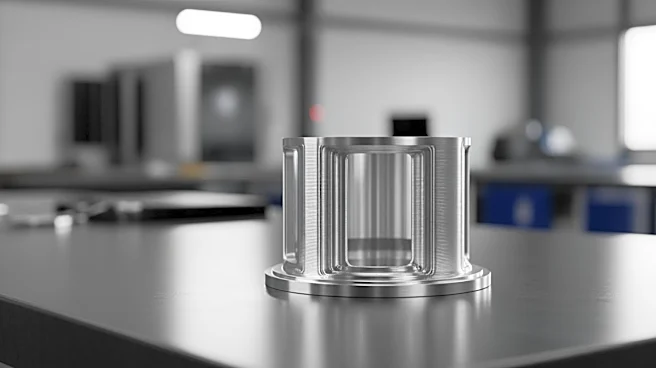
as the parts were created using metal additive manufacturing, a process similar to 3D printing but involving high-powered lasers to weld aluminum powder into solid objects. The parts delivered include a weapons pylon fitting for the AH-1Z Viper, a repair fitting for the V-22 Osprey's main landing gear, and a blanking plate for the C-130 Hercules. This initiative is part of FRCE's broader effort to modernize support and enhance mission readiness by reducing maintenance lead times and ensuring aircraft remain flight-ready.
Why It's Important?
The introduction of metal additive manufacturing at FRCE represents a strategic shift in military logistics and aircraft maintenance. By producing parts on-demand, the U.S. Navy can significantly reduce aircraft downtime, which is crucial for maintaining operational readiness. This capability allows for quicker replacement of worn or damaged parts, bypassing traditional supply chain delays. The successful implementation of this technology not only enhances the efficiency of military operations but also positions FRCE as a leader in adopting innovative manufacturing techniques within the defense sector.
What's Next?
FRCE plans to expand its metal additive manufacturing capabilities to include stainless steel, which is stronger and more durable than aluminum. This expansion will enable the production of a wider range of flight-critical parts, further increasing the fleet's readiness. The ongoing collaboration with the Naval Air Systems Command and Fleet Support Teams will likely continue to drive advancements in this area, potentially setting new standards for military manufacturing processes.