


What's Happening?
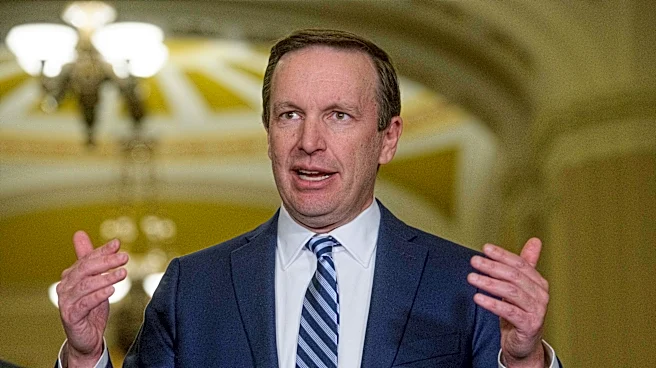
Senator Chris Murphy (D-Conn.) has been discharged from the hospital after experiencing a small hemorrhagic stroke last weekend and has entered a rehabilitation facility. The Senator announced on Friday that he expects to miss 'several weeks' of Senate
votes as he focuses on his recovery. Murphy, 53, stated that doctors are 'very encouraged' by his progress and that the rehabilitation stay is intended to facilitate a swift return to his duties. He called 911 on October 31 after feeling unwell, leading to the diagnosis of a bleed in his brain. Dr. Jose Suarez, chief of neurosciences critical care at Johns Hopkins Hospital, expressed optimism for Murphy's full recovery post-rehabilitation. Senator Murphy conveyed his gratitude to the medical staff at Johns Hopkins and assured that his office's legislative priorities and constituent services will continue uninterrupted, with his team and colleagues maintaining remote engagement.
Why It's Important?
Senator Murphy's absence from the Senate for several weeks could impact legislative proceedings, particularly given his roles on the Appropriations Committee and his prominent voice on immigration and gun policy. As a potential contender for senior leadership positions within the Democratic Party, his temporary incapacitation could shift dynamics in key policy debates and committee work. The incident also highlights the health challenges faced by members of Congress, with several other Democratic Senators, including Ben Ray Lujan, Chris Van Hollen, and John Fetterman, having experienced strokes in recent years. Their recoveries and adaptations, such as Senator Fetterman's use of live captioning technology, underscore the broader implications for legislative continuity and accessibility within the U.S. political system. Murphy's recovery period will be closely watched as the Senate navigates its legislative agenda.
What's Next?
Senator Murphy will continue his recovery at a rehabilitation facility, with the goal of returning to the Senate as quickly as possible. While he is expected to miss 'several weeks' of votes, he plans to remain engaged with his team and colleagues remotely to ensure his office's work proceeds without interruption. His staff will continue to manage legislative priorities and serve constituents. The timeline for his full return to Washington D.C. and active participation in Senate votes will depend on his progress in rehabilitation. In the interim, his colleagues will likely manage any critical votes or legislative efforts where his presence would typically be required. The Democratic Party will monitor his recovery closely, especially given his influence on key policy areas and his potential for future leadership roles.
Beyond the Headlines
Senator Murphy's stroke and subsequent recovery period bring to light the demanding nature of public service and the personal toll it can take on elected officials. The incident underscores the broader conversation about health and wellness among political leaders, particularly in high-stress environments like the U.S. Senate. It also implicitly raises questions about succession planning and the mechanisms in place to ensure governmental continuity when key figures are temporarily unable to perform their duties. The support from his colleagues, such as Senator Fetterman's well wishes, reflects a sense of camaraderie that often transcends political divides during personal health crises. Furthermore, the public nature of such health events can foster greater transparency and empathy regarding the human element of political leadership, potentially influencing how the public perceives and supports their representatives during challenging times.