

What's Happening?
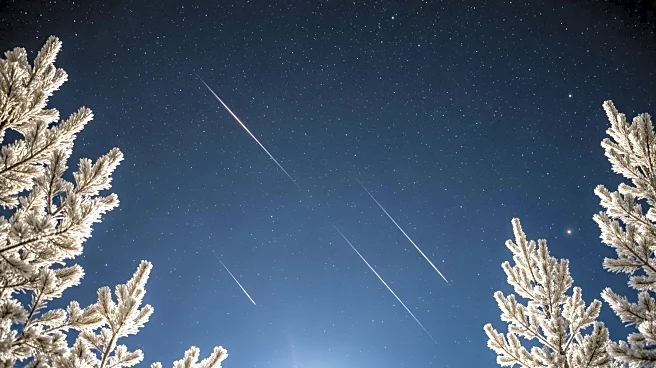
On December 21, 2025, skywatchers are treated to a spectacular night sky event coinciding with the winter solstice. The Ursid meteor shower peaks, offering a chance to see up to 10 meteors per hour under dark skies. The event is enhanced by a thin crescent
moon, providing ideal conditions for viewing. Jupiter is prominently visible, and the interstellar comet 3I/ATLAS, although faint, remains a target for telescope users. The solstice marks the longest night of the year, celebrated globally, including gatherings at Stonehenge. The event provides a unique opportunity for both amateur and experienced astronomers to enjoy the celestial display.
Why It's Important?
The convergence of the winter solstice and the Ursid meteor shower creates a rare opportunity for stargazers to experience a night of exceptional astronomical phenomena. Such events foster public interest in astronomy and provide educational opportunities about celestial mechanics and the solar system. The visibility of Jupiter and the interstellar comet adds to the excitement, encouraging both amateur astronomers and the general public to engage with the night sky. This increased interest can lead to greater support for scientific research and public outreach programs in astronomy.