






What's Happening?
Curtiss-Wright Corporation has been awarded contracts exceeding $225 million by Bechtel Plant Machinery Inc. to provide advanced propulsion valves, pumps, and instrumentation and control systems for the U.S. Navy. These critical components are destined
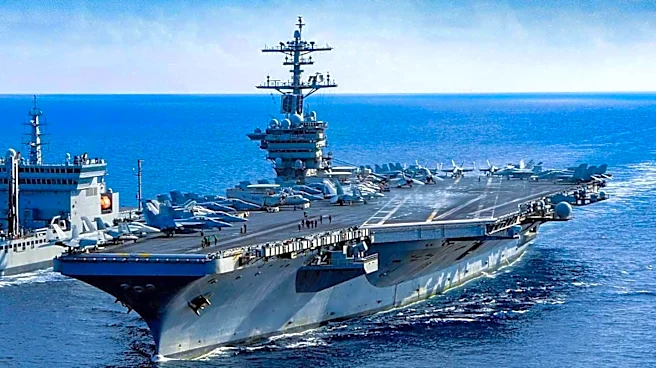
for the Virginia-class nuclear-powered attack submarine, Columbia-class submarine, and Ford-class aircraft carrier programs. The work, which includes engineering, manufacturing, and testing, is currently underway at Curtiss-Wright facilities in New York and Pennsylvania and is scheduled to continue through 2030. This initiative reinforces Curtiss-Wright’s long-standing role as a key technology supplier to the U.S. Naval Nuclear Propulsion Program, supporting both new ship construction and ongoing fleet maintenance activities.
Why It's Important?
These contracts are crucial for enhancing the performance, reliability, and readiness of the U.S. Navy's nuclear fleet, which includes some of the most powerful submarines and aircraft carriers in the world. The advanced propulsion and control technologies supplied by Curtiss-Wright are mission-critical, directly impacting the operational capabilities and safety of these vessels. This significant investment underscores the U.S. administration's continued strong funding for naval shipbuilding, aiming to accelerate production and maintenance of strategically important platforms. The work supports thousands of jobs in New York and Pennsylvania, contributing to the economic stability of these regions and strengthening the domestic defense industrial base. Maintaining a technologically superior naval fleet is paramount for national security and global power projection.
What's Next?
Engineering, manufacturing, and testing activities for these contracts are already in progress and are slated to continue through 2030. This long-term engagement indicates a sustained effort to modernize and maintain the U.S. naval fleet. Curtiss-Wright is expected to continue delivering highly engineered solutions that contribute to the nation's defense capabilities. The ongoing nature of these programs suggests that further contracts and technological advancements will likely follow as the Navy continues to upgrade its vessels and develop next-generation platforms. The emphasis on strengthening U.S. naval shipbuilding capacity will likely lead to continued investment in related industries and technologies.
Beyond the Headlines
The substantial investment in propulsion and control systems highlights the intricate and highly specialized engineering required for nuclear-powered naval vessels. This work is not just about supplying parts; it involves developing cutting-edge technologies that meet the demanding operational requirements of submarines and aircraft carriers. The long-term nature of these contracts reflects the strategic importance of maintaining a robust and technologically advanced naval force, which serves as a cornerstone of U.S. defense policy. Furthermore, the continuous partnership between the U.S. Naval Nuclear Propulsion Program and companies like Curtiss-Wright demonstrates a commitment to fostering a strong domestic industrial base capable of supporting complex defense initiatives, thereby ensuring national security and technological independence.