






What's Happening?
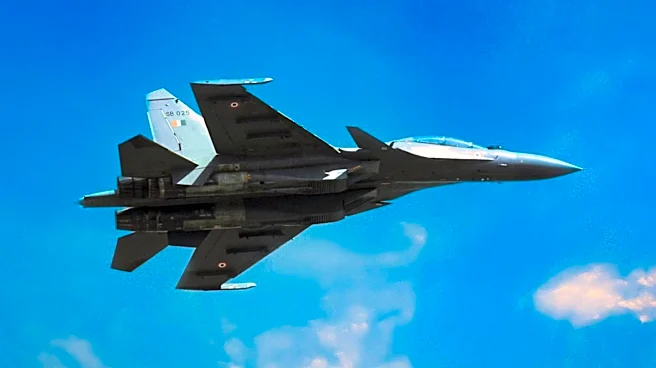
Russia is reportedly considering easing its aviation fuel standards in response to Ukrainian strikes on its oil refineries, according to Ukraine’s Foreign Intelligence Service (SZRU). The proposed changes include allowing aviation fuel with a freezing
point of up to minus 50 degrees Celsius, a decrease from the current requirement of minus 60 degrees Celsius. This adjustment could lead to fuel crystallization, potentially obstructing aircraft fuel systems. Additionally, Russia's Transport Ministry is proposing the use of Russian-made anti-wear additives, heavier crude oil, and an increased proportion of synthetic components in aviation fuel. These measures are aimed at boosting annual output by an estimated 1.8 million tonnes. The SZRU also noted that new additives and components would require testing and could accelerate wear on aircraft parts, exacerbating maintenance challenges for Russia's aviation sector, which is already operating under sanctions and facing difficulties in accessing spare parts and repairs.
Why It's Important?
This development is critical as it highlights the direct impact of geopolitical conflict on industrial standards and safety. Lowering aviation fuel standards could have significant implications for flight safety within Russia, potentially increasing the risk of mechanical failures and accidents. For the global aviation industry, it underscores the vulnerabilities of supply chains and the potential for compromised safety standards in times of conflict. Economically, while the move aims to increase domestic fuel production, it could lead to higher maintenance costs for Russian airlines and further isolate its aviation sector from international standards and markets. The reliance on potentially inferior fuel and components could also affect the longevity and reliability of Russian aircraft. This situation reflects a broader trend where sanctions and conflict force nations to compromise on established norms, with potential long-term consequences for safety and economic stability.
What's Next?
If Russia proceeds with lowering aviation fuel standards, the immediate consequence will be a change in the quality of fuel available for its domestic aviation sector. This could lead to increased scrutiny from international aviation bodies, although Russia's isolation due to sanctions may limit the direct impact of such oversight. Russian airlines and aircraft operators will likely face challenges in adapting to the new fuel specifications, potentially requiring more frequent maintenance and inspections. The SZRU's report suggests that new additives and components will need testing, which could be a complex and time-consuming process. Furthermore, the long-term effects on aircraft engines and fuel systems will need to be monitored. This situation could also prompt other nations to reassess their aviation safety protocols when dealing with Russian-made aircraft or components, or when operating in airspace where such fuel might be used. The ongoing conflict and its impact on Russia's industrial capacity will continue to shape these decisions.
Beyond the Headlines
The consideration of lowering aviation fuel standards in Russia extends beyond immediate operational concerns, touching upon broader issues of national resilience and the long-term effects of international sanctions. This move reflects a strategic decision to prioritize supply continuity over established safety and quality benchmarks, a common response in wartime economies. The potential for increased wear on aircraft parts and the challenges in accessing spare parts due to sanctions create a compounding problem, raising questions about the sustainability of Russia's aviation fleet. This situation also highlights the dual-use nature of industrial standards, where what might be considered a safety measure in peacetime can become a strategic vulnerability in conflict. The precedent set by relaxing gasoline quality requirements, which reportedly caused problems for vehicle owners, suggests a pattern of compromising standards under pressure. This could lead to a decline in overall industrial quality and consumer confidence within Russia, with lasting implications for its technological and economic development.