
What's Happening?
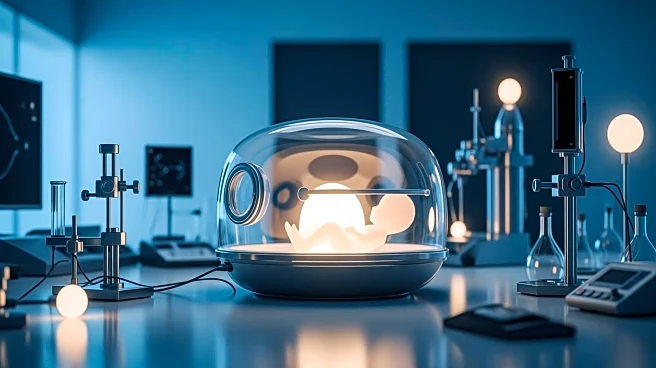
Researchers in China and the UK have developed artificial wombs to study the implantation of human embryos, a process that has been largely mysterious due to its occurrence inside the body. By recreating
a part of the womb lining in lab devices, scientists observed the entire sequence of human embryo implantation for the first time. This research aims to uncover causes of miscarriages and infertility by understanding the molecular interactions between embryos and wombs. The study involved using cells from both healthy wombs and those of women who had experienced miscarriages, allowing researchers to observe implantation failures. The findings have been published in the journals Cell and Cell Stem Cell.
Why It's Important?
This research could significantly impact reproductive health by providing insights into the causes of miscarriages and infertility, potentially leading to new treatments. However, it also raises ethical concerns about the use of human embryos in research and the possibility of developing embryos entirely in labs, a concept known as ectogenesis. While the researchers emphasize that such developments are theoretical, the potential for misuse of this technology, such as growing embryos for organ harvesting, is a concern among bioethicists. The study highlights the delicate balance between scientific advancement and ethical considerations in biomedical research.
What's Next?
The research community and bioethicists will likely continue to debate the ethical implications of using artificial wombs and the potential for extending embryo development beyond current limits. Regulatory bodies may need to establish guidelines to ensure ethical standards are maintained as this technology progresses. Further studies could explore the application of this research in developing treatments for infertility and preventing miscarriages, while also addressing the ethical challenges posed by such advancements.
Beyond the Headlines
The development of artificial wombs could lead to a paradigm shift in reproductive technology, potentially altering societal norms around childbirth and parenting. As the technology advances, it may challenge existing legal and ethical frameworks regarding human reproduction and the rights of embryos. The possibility of growing embryos outside the human body could also impact discussions on reproductive rights and the definition of life, necessitating a reevaluation of current policies and ethical standards.