







What's Happening?
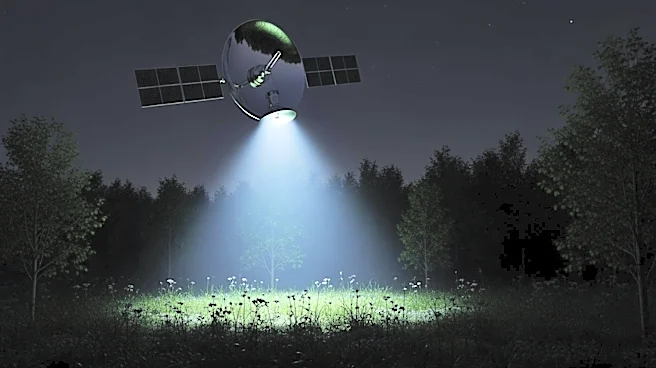
Proposals to deploy reflective mirrors and up to one million more satellites in low Earth orbit are raising concerns among scientists about potential disruptions to human health and ecosystems. The start-up Reflect Orbital plans to use satellites equipped
with large reflective mirrors to illuminate parts of the Earth at night, while SpaceX has proposed launching a massive number of satellites to create a solar-powered computing network. These initiatives have prompted letters of concern to the U.S. Federal Communications Commission (FCC) from presidents of four international scientific societies, representing about 2,500 researchers. They argue that altering the natural light-dark cycle could disrupt biological clocks, affecting sleep, hormone secretion, and ecological systems. The scientists are urging regulators to conduct a full environmental review and set limits on satellite reflectivity and night sky brightness.
Why It's Important?
The potential deployment of reflective satellites could have significant implications for both human health and the environment. Disruptions to circadian rhythms could lead to adverse health effects, while ecological systems might be affected by changes in light patterns. The increase in night sky brightness could also impact astronomical observations and the natural experience of the night sky. The proposals highlight the need for careful consideration of the environmental impacts of space innovations, akin to other large-scale environmental changes like climate change. The scientific community's call for regulatory oversight underscores the importance of balancing technological advancement with ecological and health considerations.
What's Next?
The FCC is currently considering the proposals from Reflect Orbital and SpaceX. If approved, these projects could lead to a significant increase in the number of satellites in orbit, potentially altering the night sky and affecting ecosystems globally. The scientific community is advocating for a comprehensive environmental review to assess the potential impacts and establish guidelines to mitigate negative consequences. The outcome of the FCC's decision could set a precedent for how future space technologies are evaluated and regulated, emphasizing the need for sustainable practices in space exploration.
Beyond the Headlines
The introduction of reflective satellites could lead to a new form of light pollution, with largely unstudied consequences. This includes potential public safety risks, such as intense glare or blinding flashes if systems malfunction. The proposals also raise ethical questions about the human impact on natural environments and the responsibility to preserve the night sky for future generations. As satellite numbers grow, the night sky could become dominated by artificial objects, altering the human experience and potentially affecting species that rely on natural light cues for navigation.