





What's Happening?
Pakistan's Interior Minister Mohsin Naqvi has directed authorities to expedite the completion and upgrade of hospitality facilities in Islamabad in preparation for the Shanghai Cooperation Organization (SCO) Council of Heads of State summit in August
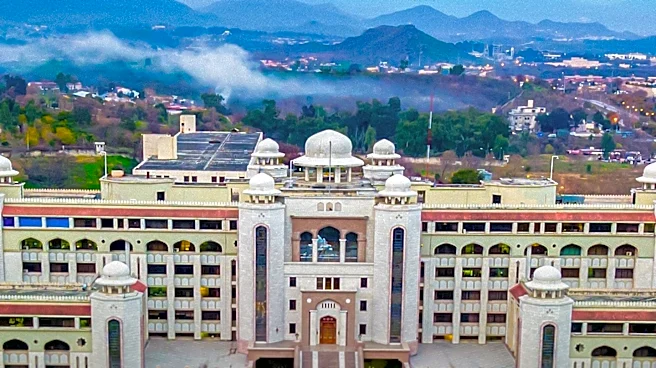
2027. This will be Pakistan's second major SCO gathering in three years. The government is undertaking several infrastructure projects, including a new convention center, cricket stadium, and safari park, to accommodate leaders from member states such as China, Russia, and India. Naqvi emphasized the need to ensure Islamabad is fully prepared and that arrangements are befitting for the distinguished guests. He also called for the renovation of existing hotels, improvements in service standards, and facilitation of partnerships between local establishments and international hotel chains. Plans are also underway to convert One Constitution Avenue into an international-standard hotel, with construction slated to begin on January 1.
Why It's Important?
While primarily an internal Pakistani initiative, the preparations for the 2027 SCO summit have broader implications for regional diplomacy and economic engagement, which can indirectly affect U.S. interests. The SCO is a significant regional bloc, and Pakistan's hosting of such a high-profile event signals its commitment to strengthening ties with member states, including China and Russia. This could influence regional power dynamics and economic alignments, potentially impacting U.S. strategic interests in South Asia. Improved infrastructure and hospitality could also enhance Pakistan's appeal for international business and tourism, leading to increased foreign investment. For the U.S., understanding these regional shifts is crucial for maintaining its diplomatic and economic influence. The summit provides a platform for major global players to converge, and the quality of Pakistan's hosting could reflect on its international standing and its ability to manage complex diplomatic events.
What's Next?
The immediate next steps involve the accelerated completion of hotel projects and infrastructure development in Islamabad. The government will continue to monitor progress on these initiatives, with a specific focus on the January 1 start date for the One Constitution Avenue conversion. There will likely be ongoing efforts to attract international hotel chains for partnerships and to enhance service standards across the hospitality sector. As the summit approaches, Pakistan will engage in extensive diplomatic preparations with SCO member states to finalize agendas and logistical arrangements. The success of these preparations will be critical for Pakistan's image on the international stage and its ability to leverage the summit for its diplomatic and economic objectives. The U.S. will likely observe these developments as part of its broader assessment of regional stability and alliances.
Beyond the Headlines
The extensive infrastructure development and hospitality upgrades undertaken by Pakistan for the SCO summit reflect a broader national strategy to enhance its global image and attract foreign investment. Beyond the immediate diplomatic event, these improvements could have long-term economic benefits, boosting tourism and business travel to Islamabad. The focus on international standards and partnerships with global hotel chains suggests an ambition to integrate Pakistan more deeply into the global economy. However, such large-scale projects also raise questions about resource allocation, environmental impact, and the potential for displacement or disruption to local communities. The summit serves as a catalyst for these changes, highlighting the interplay between international diplomacy, national development, and urban planning. The U.S. may view these efforts as part of Pakistan's evolving geopolitical alignment and economic priorities.