


What's Happening?
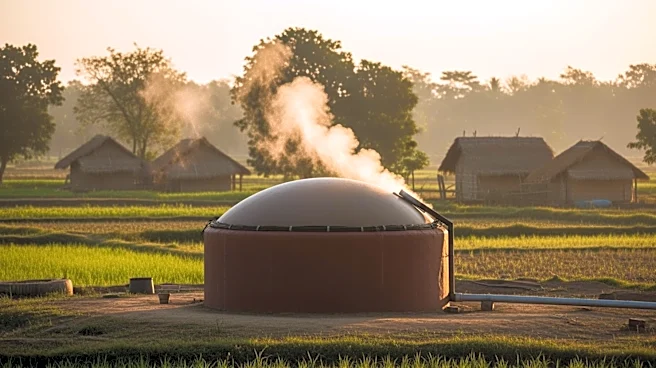
In Gujarat's Ekta Nagar, near the Statue of Unity, a significant initiative is underway to equip nearly 1,000 tribal households with biogas plants, promoting self-reliance in clean cooking fuel. Over 600 biogas plants are already operational, providing
these families with a sustainable alternative to traditional firewood. This project aligns with Prime Minister Narendra Modi's vision of Aatma Nirbhar Bharat, aiming to reduce reliance on conventional fuels and ensure access to clean energy. The initiative is being implemented across 89 villages, making kitchens smoke-free and improving living conditions. Beneficiaries, selected based on livestock ownership, receive a biogas plant with a capacity of two cubic meters, fully subsidized by the government. The biogas generated is sufficient for cooking meals for a family of 7 to 8 members, saving approximately two LPG cylinders per month.
Why It's Important?
This initiative is crucial for promoting sustainable energy solutions in rural India, particularly among tribal communities. By reducing dependence on firewood, the project not only helps in conserving forests but also improves health outcomes by reducing indoor air pollution. The economic benefits are significant, as families save on fuel costs and can redirect these savings towards other needs, such as education. Additionally, the production of organic manure as a byproduct supports agricultural activities, enhancing food security and promoting sustainable farming practices. This model of clean energy adoption could serve as a blueprint for similar initiatives across India, contributing to the country's broader environmental and economic goals.
What's Next?
The continued rollout of biogas plants in the remaining households is expected to further enhance the quality of life for these communities. As more families become self-reliant in energy, there may be increased interest from other regions to adopt similar models. The success of this initiative could lead to expanded government support and funding for renewable energy projects in rural areas. Additionally, the positive outcomes could encourage further innovation in clean energy technologies tailored to the needs of rural populations.
Beyond the Headlines
The cultural shift towards sustainable energy practices in these communities may have long-term implications for environmental conservation and rural development. By integrating modern technology with traditional practices, the initiative fosters a sense of empowerment and self-sufficiency among tribal populations. This project also highlights the potential for public-private partnerships in scaling up renewable energy solutions, offering lessons for policymakers and stakeholders in the energy sector.