
What's Happening?
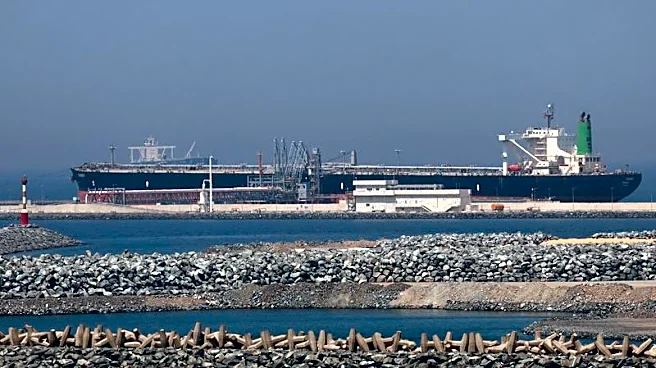
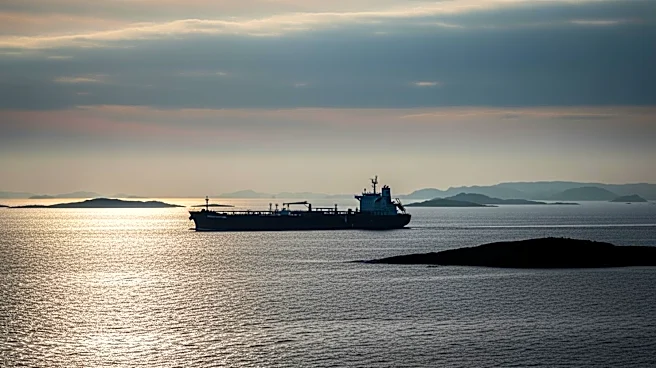
Saudi Arabia's Aramco Trading Co. and the UAE's state oil company Adnoc have been moving crude oil tankers through the Strait of Hormuz despite Iran's effective closure of the waterway. This action comes
as Iran has been menacing shipping in the strait, seizing vessels, and escalating tensions in the region. The companies have been taking significant risks, including turning off transponders to avoid detection, to ensure that some oil supply reaches global markets. The flow of non-Iranian crude through Hormuz has significantly decreased since the conflict began, with current shipments averaging about 500,000 barrels a day, compared to 13.6 million barrels a day before the war.
Why It's Important?
The movement of oil through the Strait of Hormuz is crucial as it is a vital channel for global oil supply. The current situation highlights the geopolitical risks associated with oil transportation in the region. The reduced flow of oil has contributed to a global supply crisis, affecting oil prices and economic stability worldwide. Companies like Aramco and Adnoc are navigating these challenges to maintain supply, but the risks involved could lead to further disruptions. The situation underscores the vulnerability of global energy markets to regional conflicts and the strategic importance of the Strait of Hormuz.
What's Next?
As tensions continue, it is likely that companies will keep employing covert methods to transport oil, potentially leading to further confrontations. The international community may need to intervene diplomatically to stabilize the region and ensure the safe passage of oil. Additionally, countries dependent on oil from the Middle East might seek alternative sources or increase their strategic reserves to mitigate the impact of supply disruptions.