







What's Happening?
The ongoing conflict between the United States and Iran has led to significant disruptions in global energy markets. Despite a temporary ceasefire, the situation remains volatile, with U.S. sanctions on Iran continuing to impact the country's oil exports.
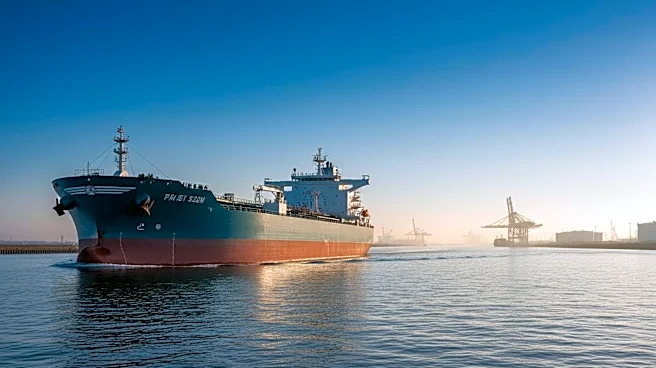
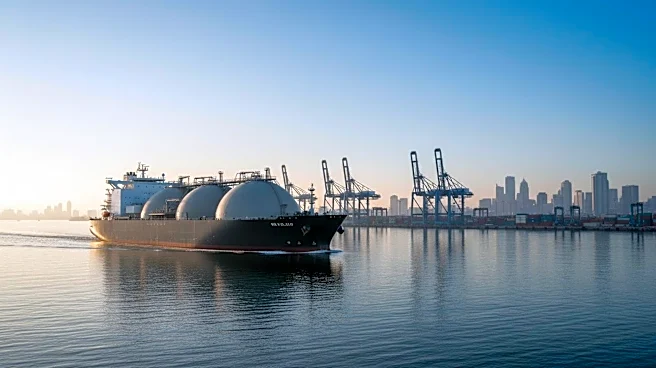
These sanctions have constrained Iran's ability to generate revenue from its hydrocarbon exports, which are a crucial source of foreign currency. The Strait of Hormuz, a vital waterway for global oil and LNG exports, remains a focal point of tension, with potential military activities and threats to commercial shipping elevating insurance costs and freight rates. The uncertainty surrounding the ceasefire and the potential for renewed conflict have kept markets on edge, with geopolitical risk premiums affecting crude oil and LNG prices.
Why It's Important?
The implications of the U.S.-Iran conflict are profound for global energy markets and the broader economy. Continued sanctions on Iran could exacerbate economic pressures, limiting the country's access to international financing and investment in its energy sector. For the U.S., the situation presents both challenges and opportunities. American crude oil production and LNG exports are becoming increasingly important for allies seeking to diversify their energy sources away from politically unstable regions. The conflict could accelerate investment in domestic energy infrastructure, including pipelines and export facilities. However, higher energy prices could lead to increased costs for manufacturers, airlines, and transportation companies, potentially driving inflation and complicating central bank policies.
What's Next?
If diplomacy fails and the ceasefire proves temporary, the energy markets could face another reckoning. Geopolitical risk premiums are likely to return, affecting crude oil and LNG prices. Governments may accelerate efforts to replenish strategic petroleum reserves, tightening global balances. The U.S. could see increased demand for its LNG exports as countries seek reliable alternatives. Freight markets may tighten due to higher insurance premiums and security requirements, impacting transportation costs. The situation could also lead to a reshaping of capital allocation, with increased investment in energy security projects and diversification of fuel sources.
Beyond the Headlines
The conflict highlights the growing importance of resilience and geopolitical stability in energy markets. As countries seek to reduce dependence on unstable regions, the strategic position of producers outside the Middle East, such as the U.S., Canada, and Brazil, could be strengthened. The situation underscores the need for a diversified energy portfolio and the potential for natural gas and nuclear energy to play a larger role in achieving energy independence. The broader lesson for investors is that energy markets are increasingly driven by factors beyond production and demand, with resilience and supply security becoming key considerations.