




What's Happening?
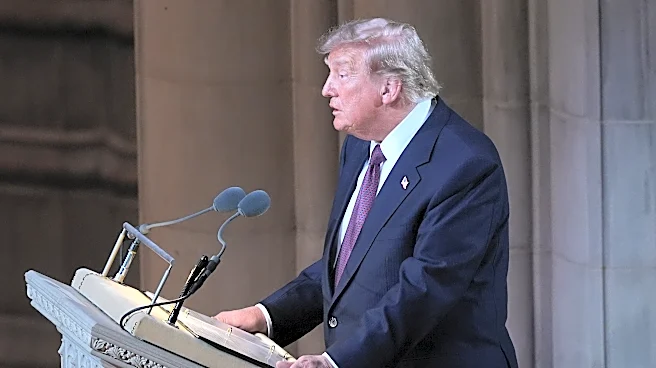
Rep. Eric Burlison has commented on President Trump's directive to waive certain nondisclosure agreements (NDAs) for individuals with information about unidentified anomalous phenomena (UAP). Burlison's office is offering support to whistleblowers and
is seeking public guidance on the directive's implementation. In addition to his comments on the UAP directive, Burlison disclosed $120.9K in fundraising in a Pre-Primary FEC disclosure, with 89.7% of contributions coming from individual donors. His net worth is estimated at $1.0M, with significant investments in publicly traded assets. Burlison has also proposed several bills, including the Great American Healthcare Plan, which aims to expand Health Savings Accounts for small businesses.
Why It's Important?
The directive to waive UAP-related NDAs could lead to increased transparency and information sharing, potentially impacting national security and public policy. Burlison's involvement highlights the role of congressional oversight in ensuring accountability. His fundraising efforts and financial disclosures provide insight into his political influence and priorities. The proposed healthcare legislation reflects Burlison's focus on addressing healthcare affordability for small businesses, a critical issue for many constituents. These developments underscore the interconnectedness of political actions, financial transparency, and legislative priorities in shaping public policy.
What's Next?
As the ODNI prepares to issue guidance on the UAP directive, Burlison's office will continue to assist individuals in navigating the disclosure process. The impact of the directive on national security and public understanding of UAPs will be closely monitored. Burlison's fundraising and legislative efforts will likely influence his political standing and policy initiatives. The proposed healthcare legislation may advance through Congress, potentially providing small businesses with more flexible healthcare options. Stakeholders will watch for further developments in these areas to assess their implications for public policy and political dynamics.