





What's Happening?
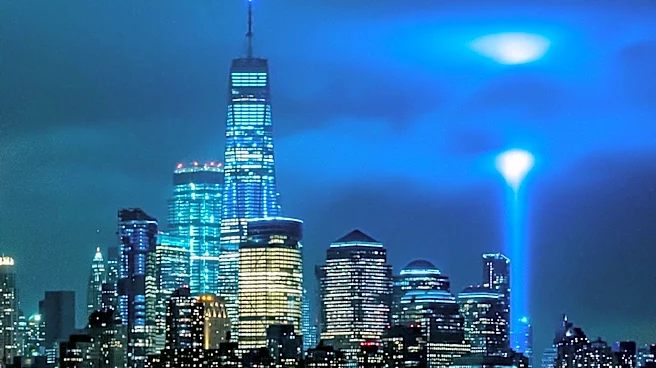
A Gen Z New Yorker, born three years after the September 11, 2001, attacks, reflects on the profound and lasting impact of the event on her life and the city. Despite not having lived through the attacks directly, the author describes how 9/11 remains
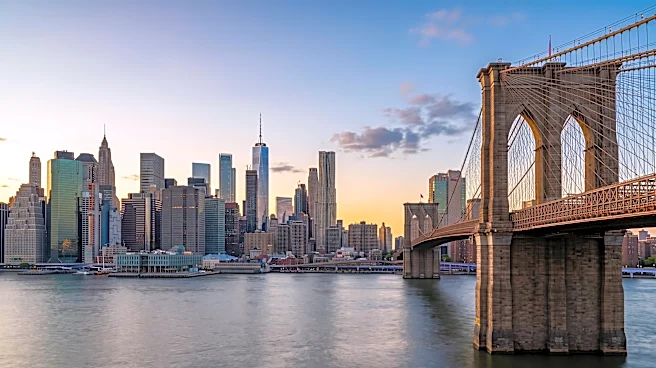
a constant presence, marked by the 'loud silence' that permeates New York City. She recounts growing up with memorials, such as the plaques at FDNY Engine 54 in Midtown, and witnessing the construction of One World Trade Center. A particularly impactful memory is her fifth-grade teacher, Ms. Ventura, sharing her personal story of her mother surviving the towers' collapse, covered in dust. This experience underscored the importance of oral histories in conveying the emotional depth of historical events and bridging generational understanding.
Why It's Important?
This reflection is important because it illustrates how historical trauma, like the 9/11 attacks, continues to shape the identity and perspective of subsequent generations, even those born after the event. For Gen Z New Yorkers, 9/11 is not just a historical fact but a lived reality, influencing their understanding of resilience, community, and vulnerability. The emphasis on oral histories highlights their critical role in transmitting emotional and cultural memory, ensuring that the lessons and human impact of such events are not lost. This perspective offers valuable insight into how a major national tragedy can foster a collective identity and a shared sense of purpose across different age groups, reinforcing the idea that history is a continuous, evolving narrative.
What's Next?
The continued sharing of personal stories and oral histories, as exemplified by Ms. Ventura's account, will remain crucial in educating future generations about 9/11. Educational institutions and community organizations will likely continue to develop programs that ensure the memory of the attacks and their aftermath is preserved and understood. As Gen Z comes of age, their unique perspective on 9/11, shaped by growing up in its shadow, will contribute to new forms of remembrance and artistic expression. This ongoing engagement with the past will help maintain a collective consciousness about the event's significance, fostering resilience and unity within the community. The physical landmarks, like One World Trade Center, will continue to serve as tangible reminders of both loss and rebuilding.
Beyond the Headlines
Beyond the immediate historical context, this reflection delves into the psychological and cultural dimensions of collective memory. The 'loud silence' described by the author speaks to the pervasive, unspoken understanding of loss and resilience that defines New York City post-9/11. The experience of immigrant families viewing the towers as a symbol of the 'American Dream' adds another layer of complexity, highlighting how a single event can intersect with diverse personal narratives and aspirations. The article implicitly argues for the power of empathy and shared vulnerability in uniting a community, suggesting that even those unaffected directly by a tragedy can connect through the stories of others. This intergenerational bonding through shared historical consciousness is a profound aspect of national identity and collective healing.