






What's Happening?
DTE Energy is partnering with the Veridian at County Farm housing community in Ann Arbor, a net-zero development, for a new pilot project. This initiative, approved by the Michigan Public Service Commission, aims to study how the utility can effectively
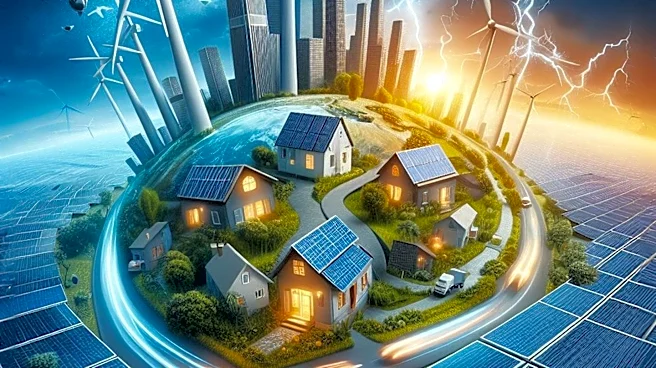
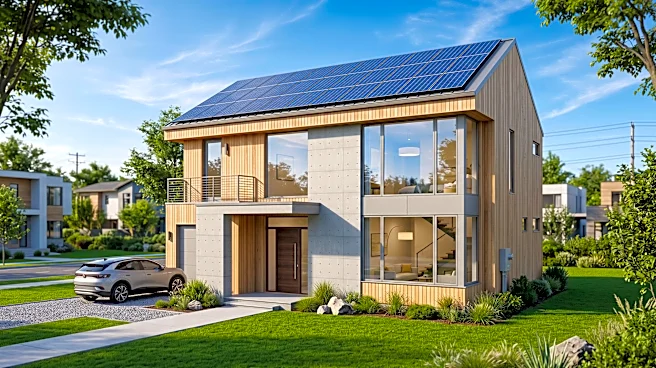
utilize locally produced excess electricity generated by the community. The homes in Veridian at County Farm are designed to produce at least as much energy as they consume, primarily through solar panels, geothermal systems, and home battery storage for heating and cooling. The pilot project will focus on how DTE Energy can dispatch and integrate this stored excess electricity from residential batteries into the broader electric grid, essentially creating a 'virtual power plant.' This collaboration seeks to understand the performance of these residential assets under real-world conditions and explore the potential for scaling such programs across DTE's service territory.
Why It's Important?
This pilot project is significant for the U.S. energy sector and environmental policy. It represents a tangible step towards integrating distributed renewable energy sources into the traditional grid, which is crucial for decarbonization efforts and enhancing grid resilience. By studying how to capture and utilize locally produced excess electricity, DTE Energy can develop models for virtual power plants that could reduce reliance on conventional fossil fuel-burning power plants. This has implications for reducing carbon emissions and promoting energy independence at a local level. For consumers, successful implementation could lead to more affordable and reliable electricity, as well as opportunities for homeowners to contribute to and benefit from the energy grid. The project also serves as a proof point for the viability of net-zero housing developments, potentially influencing future urban planning and construction practices nationwide.
What's Next?
The DTE Energy pilot project at Veridian at County Farm will proceed with studying how homeowners store and use their locally produced electricity, and how DTE can dispatch the excess at regular intervals. The company will gather data on the performance of residential batteries and customer engagement with the program. Based on the findings, DTE Energy plans to gain insights into how to scale potential future residential battery offerings across its service territory. This could lead to the development of broader programs that incentivize homeowners to install solar panels and battery storage, contributing to a more decentralized and renewable energy grid. The success of this pilot could also encourage other utility companies and regulatory bodies to explore similar virtual power plant models, potentially accelerating the transition to clean energy and influencing energy policy at state and national levels.
Beyond the Headlines
The DTE Energy pilot project extends beyond immediate energy benefits, touching upon broader societal and technological shifts. It highlights a move towards a more democratic and decentralized energy system, where individual homes become active participants in electricity generation and distribution, rather than solely consumers. This 'bottom-up' approach challenges the traditional utility monopoly model and empowers communities to create carbon-free electricity from their own resources. Ethically, it raises questions about energy equity and access, as the widespread adoption of such technologies could reduce energy costs and increase energy independence for more communities. Technologically, it pushes the boundaries of smart grid development and energy storage solutions, paving the way for more resilient and sustainable urban infrastructures. This initiative could fundamentally alter how energy is produced, consumed, and managed in the U.S., fostering a more sustainable and community-centric energy future.