



What's Happening?
The U.S. government has proposed substantial reductions in water allocations for Arizona, California, and Nevada as part of a new plan to manage the drought-stricken Colorado River. This proposal, released by the U.S. Bureau of Reclamation, aims to address
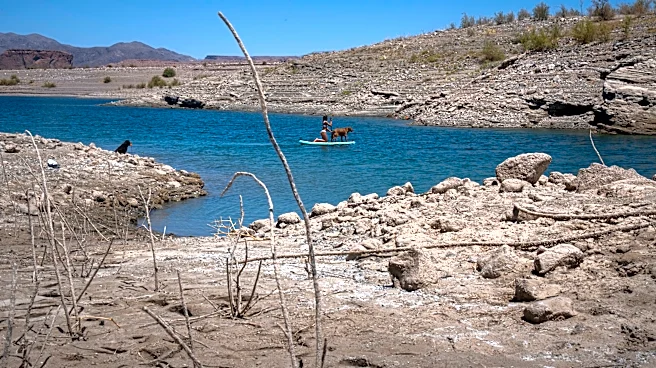
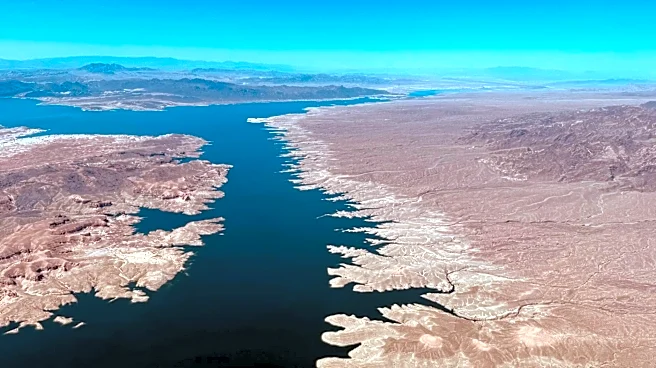
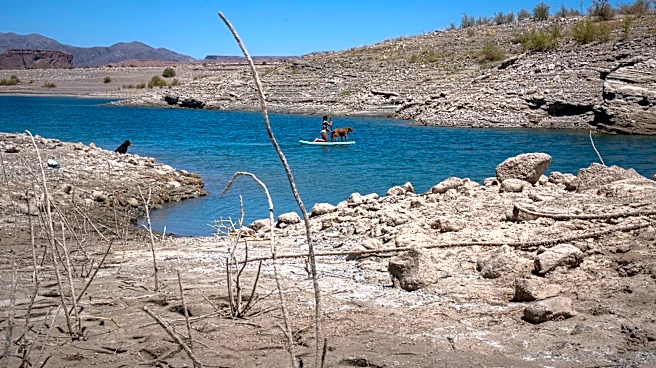
the severe water shortages affecting the river, which is crucial for providing water to one in ten Americans, supporting agricultural land that produces 15% of the nation's food, and generating power for six million people across seven states. The plan suggests water shortages of up to three million acre-feet per year for the three Lower Basin states, representing a 40% reduction from current levels. This comes after the states failed to reach a consensus on water sharing following over three years of negotiations. The proposal is intended to prevent the collapse of the river's two largest reservoirs, Lake Powell and Lake Mead, which are at historically low levels.
Why It's Important?
The proposed water cuts are significant as they highlight the ongoing challenges of managing water resources in the face of prolonged drought conditions. The Colorado River is a vital water source for millions of people and a key component of the agricultural and energy sectors in the region. The proposed reductions could have far-reaching impacts on these industries, particularly in Arizona, which relies heavily on the river for its water supply. The plan has already faced criticism, with Arizona officials labeling it 'unacceptable' due to the potential economic and social consequences. The situation underscores the broader issue of water scarcity in the western United States, exacerbated by climate change and increasing demand.
What's Next?
The proposal is likely to face legal challenges from the affected states, particularly Arizona, which has expressed strong opposition to the plan. The U.S. Bureau of Reclamation's guidelines for 2027 and 2028 are expected to be released soon, which may provide further clarity on the future of water management in the region. Stakeholders, including state governments and agricultural interests, will need to navigate these changes and potentially adapt to reduced water availability. The ongoing drought and its impact on water resources will continue to be a critical issue for policymakers and communities in the western United States.
Beyond the Headlines
The situation with the Colorado River reflects a broader global trend of regions facing 'water bankruptcy,' where water resources are being depleted faster than they can be replenished. This has significant implications for environmental sustainability and economic stability. The challenges faced by the Colorado River Basin states may serve as a warning for other regions experiencing similar water scarcity issues. The need for innovative water management solutions and cooperative agreements among states and stakeholders is becoming increasingly urgent as climate change continues to alter precipitation patterns and exacerbate drought conditions.