


What's Happening?
President Trump announced the deployment of Immigration and Customs Enforcement (ICE) agents to airports as a response to the ongoing shutdown of the Department of Homeland Security (DHS). This move is seen as a temporary measure to address security concerns
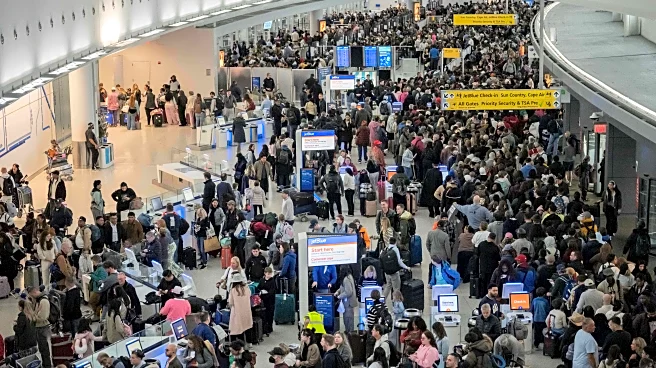
at airports, where Transportation Security Administration (TSA) agents have been working without pay due to the shutdown. The decision has been criticized as a stunt rather than a viable policy solution. ICE agents are not trained for TSA duties, and their involvement is limited to tasks like guarding exit doors and checking driver’s licenses. The shutdown, which began on Valentine’s Day, has left TSA agents unpaid for five weeks, leading to increased absenteeism and operational challenges at airports.
Why It's Important?
The deployment of ICE agents to airports highlights the broader implications of the DHS shutdown on national security and public safety. The shutdown has disrupted the operations of TSA, a critical component of airport security, potentially compromising the safety of air travel. The situation underscores the need for a resolution to restore DHS funding and ensure that TSA agents are compensated for their work. The political standoff between President Trump and Democratic leaders over immigration policies and funding priorities has prolonged the shutdown, affecting federal employees and services. The decision to use ICE agents, who are not specialized in airport security, raises concerns about the effectiveness and efficiency of airport operations during this period.
What's Next?
Negotiations are ongoing to resolve the DHS shutdown, with both parties seeking a compromise. Democratic leaders are pushing for ICE agents to obtain judicial warrants before entering homes, a policy that has been verbally supported by Sen. Markwayne Mullin, the nominee for DHS secretary. Other negotiation points include the expanded use of body-worn cameras and limiting civil enforcement activities at sensitive locations like hospitals and schools. The resolution of these issues could pave the way for restoring DHS funding and ending the shutdown. The outcome of these negotiations will have significant implications for federal employees, airport security, and the broader immigration policy landscape.