


What's Happening?
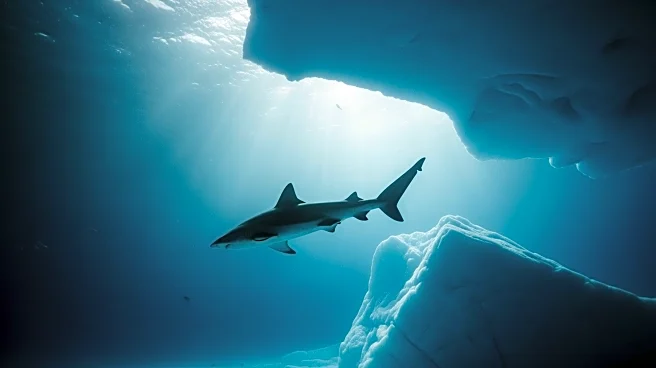
Scientists from the Minderoo-UWA Deep-Sea Research Centre have captured the first-ever footage of a sleeper shark in the Southern Ocean, marking a significant milestone in marine research. This discovery reveals the presence of a species previously thought
to be absent from Antarctic waters, challenging existing assumptions about marine life in extreme environments. The footage, which features a Southern sleeper shark, provides new insights into how marine species adapt to harsh conditions. Dr. Kolbusz, a researcher involved in the study, expressed surprise at the finding, noting it as the first visual confirmation of a shark in Antarctica. The research aims to reshape understanding of the Antarctic ecosystem and the potential impacts of climate change on marine species.
Why It's Important?
The discovery of the Southern sleeper shark in Antarctic waters is significant as it raises questions about the impact of climate change on marine life. The presence of this shark species in such extreme conditions suggests a potential shift in species distribution due to warming oceans. This finding is crucial for understanding how marine species might adapt to changing environmental conditions, which is essential for predicting future biodiversity in the Southern Ocean. The research conducted by the Minderoo-UWA Deep-Sea Research Centre highlights the importance of continued study in this area, as it could provide valuable data for conservation efforts and policy-making related to climate change and marine ecosystems.
What's Next?
Ongoing research efforts will focus on genetic analyses of the Southern sleeper shark to better understand its distribution and adaptation mechanisms. These studies, scheduled to begin in mid-2026, will include genetic data from the South Atlantic and Indian Oceans. The data gathered will be crucial for predicting how these sharks, and other marine species, might fare in the future as climate change continues to affect ocean temperatures. The research aims to uncover the broader impacts of warming temperatures on Antarctic ecosystems, potentially leading to new conservation strategies and policies to protect marine biodiversity.