
What's Happening?
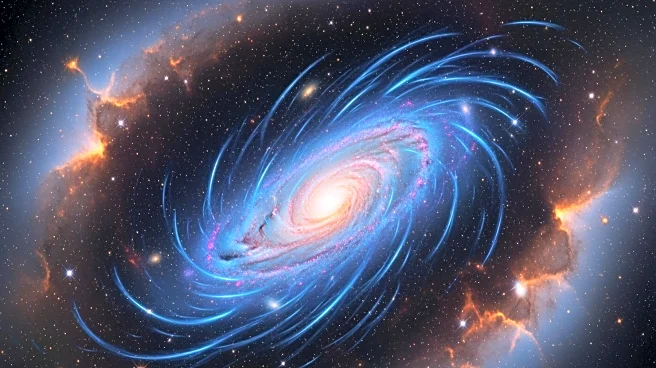
The NASA/ESA Hubble Space Telescope has captured a striking image of the galaxy NGC 4388, located in the Virgo galaxy cluster, approximately 60 million light-years away. The image reveals a plume of gas
emanating from the galaxy's nucleus, a feature not visible in previous images. This outflow is believed to be caused by the galaxy moving through the hot gas of the Virgo cluster's intracluster medium, which strips gas from the galaxy's disk. The ionization of this gas, causing it to glow, is thought to be due to energy from the galaxy's central supermassive black hole and shock waves.
Why It's Important?
This discovery provides valuable insights into the interactions between galaxies and their environments. Understanding the mechanisms behind gas outflows in galaxies like NGC 4388 can help astronomers learn more about galaxy evolution and the role of supermassive black holes. The findings also contribute to the broader study of the Virgo cluster, the nearest large galaxy cluster to the Milky Way, offering a closer look at the dynamics within such clusters. This research enhances our understanding of the universe's structure and the processes that shape galaxies.