





What's Happening?
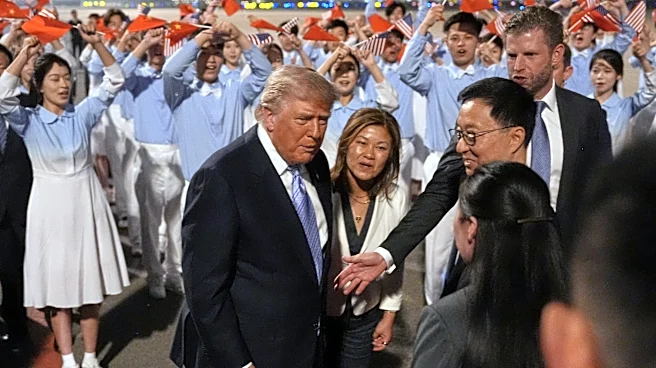
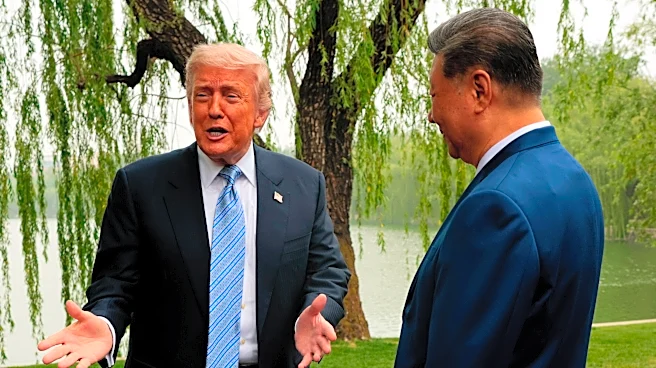
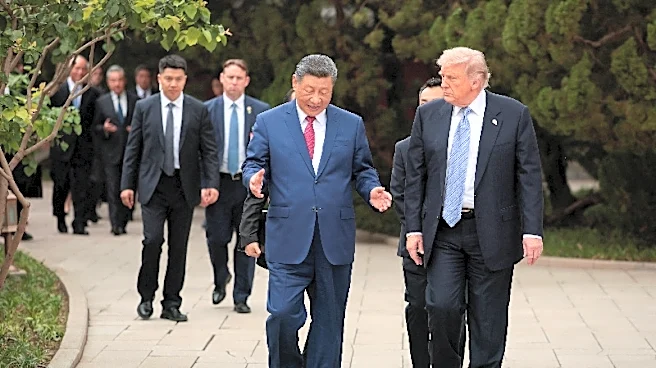
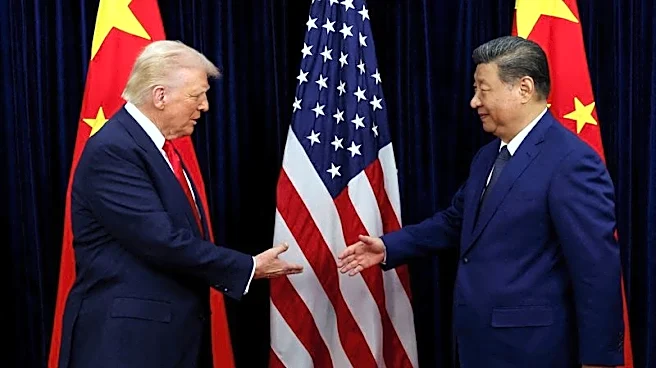
During a summit in China, President Trump and his White House staff faced significant logistical challenges due to cybersecurity concerns. To protect sensitive information from potential hacking, the administration implemented a 'digital lockdown,' which
included the use of burner phones and email addresses. These devices were stripped of most functions to minimize data exposure. Personal devices were stored in Faraday bags on Air Force One to block all signals, ensuring data security. This measure was part of broader efforts to maintain information security while facilitating the summit's operations. The State Department has advised travelers to China that there is no expectation of privacy on mobile networks, prompting many to use devices devoid of personal information. President Trump, known for his frequent phone use, had to limit his communication, including posts to his Truth Social account, which were managed from Washington, D.C.
Why It's Important?
The security measures taken during President Trump's visit to China underscore the ongoing concerns about cybersecurity, particularly in international contexts. The decision to restrict personal device use highlights the potential risks of data breaches and the importance of safeguarding sensitive information. This approach reflects broader national security strategies aimed at protecting U.S. interests abroad. The summit's focus on critical issues such as trade, technology, and geopolitical tensions further emphasizes the need for secure communication channels. The measures also illustrate the challenges faced by high-profile figures in maintaining operational security while engaging in diplomatic activities.
What's Next?
As President Trump and his team return to the U.S., they will regain access to their personal devices, resuming normal communication. The summit's outcomes, particularly discussions on trade and geopolitical issues, may lead to further diplomatic engagements and policy adjustments. The experience may prompt the administration to review and enhance cybersecurity protocols for future international trips. Additionally, the summit's discussions could influence U.S.-China relations, impacting trade policies and strategic alliances.
Beyond the Headlines
The digital security measures taken during the summit highlight the evolving nature of international diplomacy in the digital age. The reliance on technology for communication and information sharing presents both opportunities and vulnerabilities. This situation raises questions about the balance between accessibility and security, particularly for government officials operating in foreign environments. The incident also reflects broader societal concerns about privacy and data protection, which are increasingly relevant in a connected world.