



What's Happening?
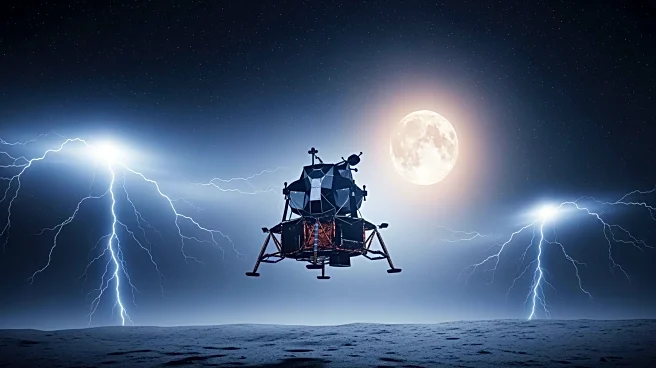
On November 14, 1969, the Apollo 12 mission launched from Kennedy Space Center, marking NASA's second manned mission to the moon. Shortly after liftoff, the Saturn V rocket was struck by lightning twice within a minute, causing significant electrical
issues. The crew, consisting of Charles Conrad, Alan Bean, and Richard Gordon, faced alarms indicating failures in power generation and guidance systems. The situation was resolved by flight controller John Aaron, who advised switching the signal condition equipment to auxiliary power, restoring normal function. Despite the initial setbacks, the mission continued, and five days later, Conrad and Bean successfully landed the lunar module on the moon.
Why It's Important?
The Apollo 12 mission's success despite the lightning strikes demonstrates the resilience and problem-solving capabilities of NASA's team. This event highlighted the importance of thorough training and preparedness for unexpected challenges in space missions. The mission contributed to NASA's understanding of lunar exploration and set a precedent for handling in-flight emergencies. The lessons learned from Apollo 12 influenced future mission protocols, including changes to launch criteria to avoid similar weather-related risks. This mission remains a testament to human ingenuity and the collaborative efforts required for successful space exploration.