



What's Happening?
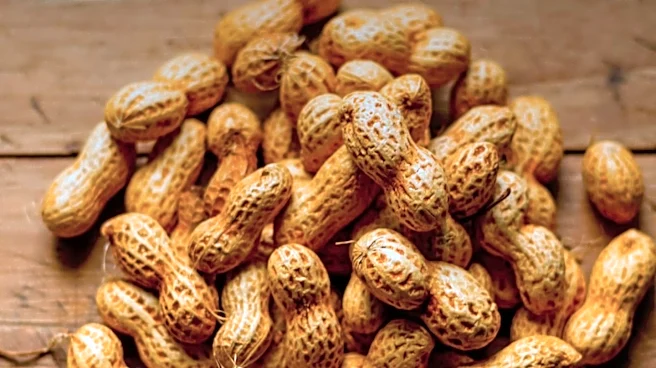
A recent study has successfully developed a cryopreservation protocol for the embryonic axes of six South American peanut genotypes, including ECU-12466. The protocol involves a one-hour desiccation on silica gel followed by a one-hour cryoprotection
using Plant Vitrification Solution 2 (PVS2). This method has shown promising results, with germination rates for cryopreserved axes ranging from 71.4% to 85.7%. The study highlights the resilience of these axes to varying desiccation and PVS2 treatment times, particularly at one hour. The research also tested the protocol's applicability on five additional peanut genotypes, achieving high germination rates of up to 95.4% after 15 days. However, the rooting success was significantly lower compared to the control group. This study provides critical parameters for optimizing cryopreservation protocols, contributing to more effective long-term conservation strategies for plant genetic resources.
Why It's Important?
The development of an effective cryopreservation protocol for peanut genotypes is significant for the conservation of plant genetic resources. By ensuring high germination rates and resilience to treatment variations, this protocol supports the preservation of genetic diversity, which is crucial for agricultural sustainability and food security. The ability to maintain genetic resources through cryopreservation allows for the safeguarding of biodiversity, which is essential for breeding programs and the development of crops that can withstand environmental changes. This research not only aids in the conservation of peanut genotypes but also sets a precedent for similar efforts in other plant species, potentially enhancing global food security and agricultural resilience.