



What's Happening?
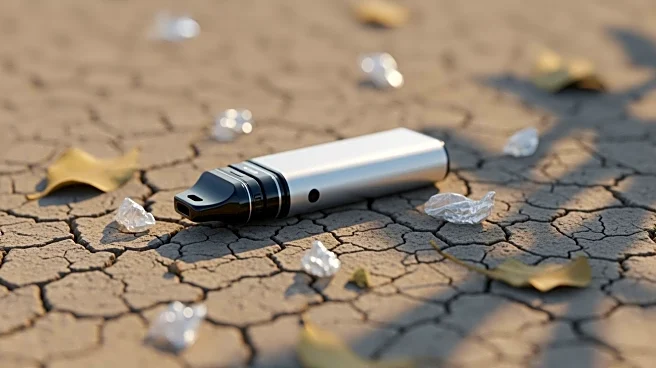
A homeowner recently discovered a mysterious device in their driveway, which was identified as a disposable vape. This incident highlights a growing issue with the disposal of such devices, which are often discarded in public spaces. Disposable vapes
pose environmental hazards due to their plastic components and toxic materials like lead and mercury in their batteries. These materials can contaminate soil and water sources, and the batteries pose a fire risk if damaged. The prevalence of disposable vapes, with an estimated 500,000 discarded daily, underscores the challenges of managing electronic waste in consumer products.
Why It's Important?
The improper disposal of disposable vapes represents a significant environmental and public safety issue. As these devices become more common, the accumulation of electronic waste poses risks to ecosystems and human health. The convenience of disposable vapes contributes to their widespread use and subsequent littering, exacerbating the problem. Addressing this issue requires increased awareness and potentially new regulations to manage electronic waste more effectively. The situation also reflects broader concerns about consumer habits and the environmental impact of single-use products.
Beyond the Headlines
The issue of disposable vape waste touches on broader themes of consumer responsibility and corporate accountability. The trend towards single-use electronics reflects a culture of convenience that often overlooks environmental costs. Solutions may involve encouraging the development of reusable or recyclable alternatives and implementing stricter waste management policies. This situation also raises questions about the role of manufacturers in designing products that minimize environmental impact and the need for public education on responsible disposal practices.