
What's Happening?
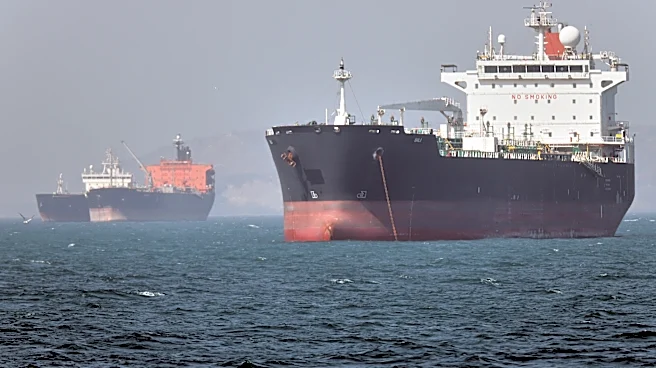
President Trump has announced a temporary pause on 'Project Freedom', a U.S. military operation aimed at guiding commercial ships through the Strait of Hormuz. This decision comes just one day after the operation began,
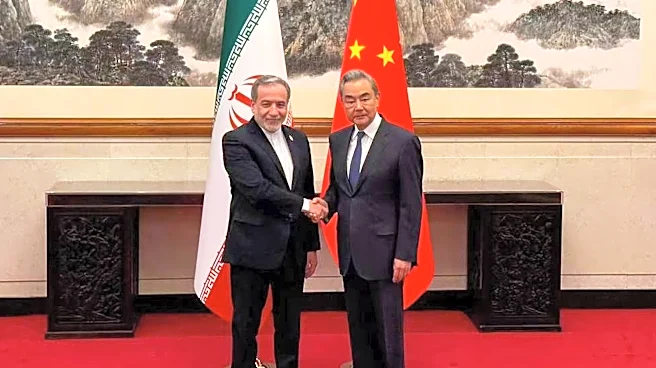
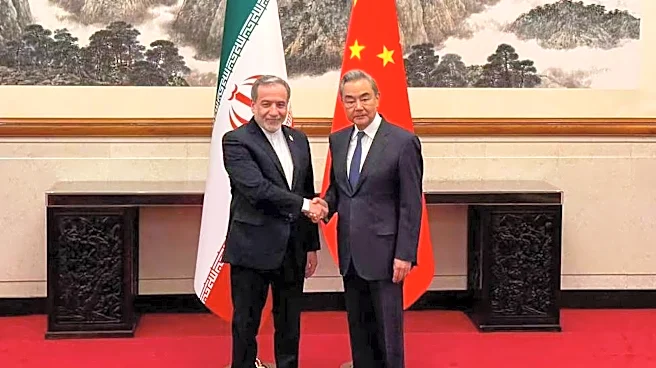
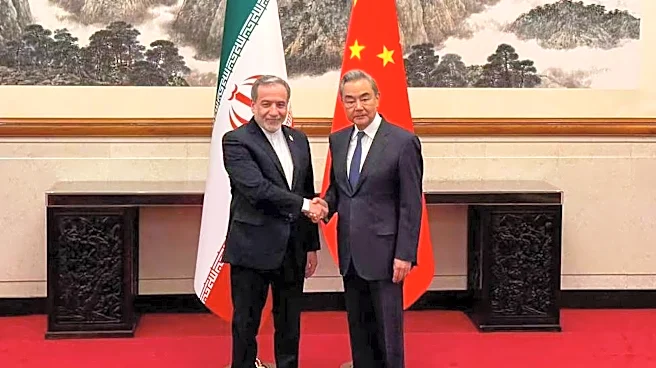
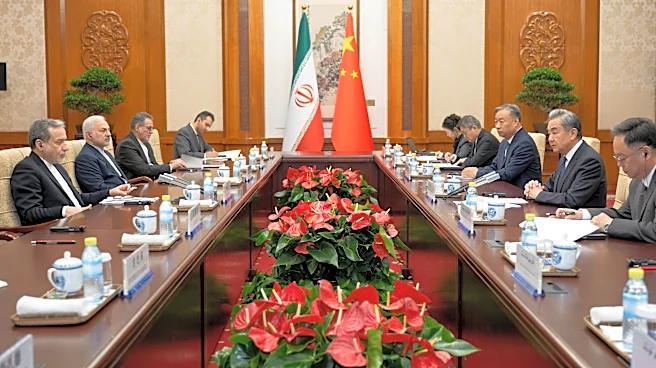
as Trump cited significant progress towards a potential agreement with Iran. The announcement was made via a Truth Social post, where Trump expressed optimism about reaching a 'Complete and Final Agreement' with Iran. This development coincides with China's diplomatic engagement with Iran, as Chinese Foreign Minister Wang Yi met with Iran's Foreign Minister Abbas Araghchi in Beijing. The meeting marks the first high-level contact since the U.S.-Israel conflict with Tehran began. Meanwhile, South Korea's Kospi index has surged over 70% this year, driven by a significant rise in Samsung shares, which have pushed the company's market capitalization past $1 trillion.
Why It's Important?
The pause in 'Project Freedom' reflects a potential de-escalation in U.S.-Iran tensions, which could have significant implications for global oil markets and geopolitical stability. The Strait of Hormuz is a critical chokepoint for global oil shipments, and any reduction in military activity could ease concerns over supply disruptions. Additionally, the diplomatic engagement between China and Iran suggests a possible shift in regional alliances and influence. The surge in South Korea's Kospi index, particularly driven by Samsung's performance, highlights the growing investor interest in artificial intelligence-linked stocks, which could have broader implications for global tech markets and economic growth.
What's Next?
The next steps involve monitoring the progress of U.S.-Iran negotiations and any formal agreements that may arise. The international community will be watching closely for any official announcements or changes in military posture in the region. Additionally, the financial markets will likely respond to further developments in the U.S.-Iran talks, as well as continued performance in the tech sector, particularly in South Korea. Stakeholders, including political leaders and investors, will need to assess the potential impacts on energy prices, regional stability, and market dynamics.