






What's Happening?
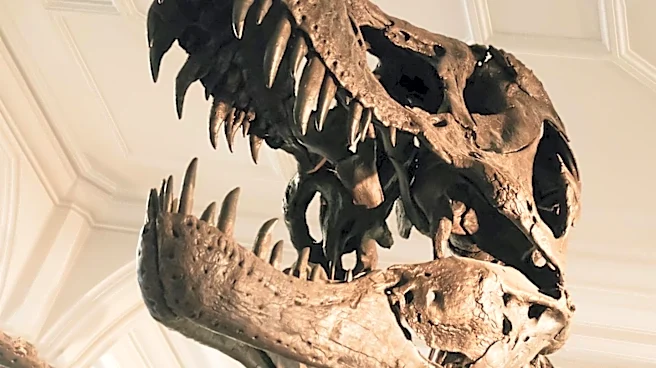
A new species of dinosaur, Paludohadros proudlovii, has been identified after its fossils remained mislabeled as Iguanodon in a London museum for 25 years. The fossils, discovered in 2001 at Ewhurst Works in Surrey, England, were donated to the Natural
History Museum and reanalyzed in 2026. Paludohadros proudlovii, a plant-eating Iguanodontian, lived approximately 125 million years ago during the Early Cretaceous period in southern England's swampy Weald Clay Formation. The specimen found was a juvenile, estimated to be about 16 feet long and weighing up to 2.2 tons, with paleontologists believing adults could have been twice that size. The name 'Paludohadros' means 'swamp' in Latin, reflecting its habitat, while 'proudlovii' honors Will Proudlove, a dinosaur enthusiast who worked at the fossil site and passed away a year before the discovery. The proximity of its fossils to those of Baryonyx, a large carnivorous dinosaur, suggests that a Baryonyx may have preyed upon or scavenged the young Paludohadros proudlovii.
Why It's Important?
The identification of Paludohadros proudlovii highlights the ongoing process of paleontological discovery and the critical role of museum collections in advancing scientific understanding. This finding expands the known diversity of Iguanodontians, a group previously thought to be less varied, and provides new insights into the ecosystems of Early Cretaceous England. The detailed analysis of the fossil, including evidence of its potential predation by Baryonyx, offers a rare glimpse into predator-prey relationships and the harsh realities of prehistoric life. Such discoveries contribute significantly to reconstructing ancient environments and understanding the evolutionary pressures that shaped dinosaur species. The story also underscores the importance of re-examining existing collections with new technologies and perspectives, as valuable information can remain hidden for decades.
What's Next?
The identification of Paludohadros proudlovii is expected to spur further research into the Iguanodontian genus and the broader paleontological landscape of the Weald Clay Formation. Scientists will likely continue to re-evaluate other mislabeled or unexamined fossils in museum collections, potentially leading to the discovery of more new species. The detailed study of Paludohadros proudlovii's anatomy, diet, and interactions with other dinosaurs like Baryonyx will provide a more comprehensive picture of its ecological role. This discovery may also encourage more focused excavations in the Ewhurst Works area, given its rich fossil preservation capabilities. The ongoing research will contribute to a more nuanced understanding of dinosaur evolution and the biodiversity of the Early Cretaceous period.
Beyond the Headlines
The narrative of Paludohadros proudlovii extends beyond scientific classification, touching upon the human element of discovery and legacy. The naming of the dinosaur in honor of Will Proudlove, a passionate amateur, underscores the contributions of individuals outside formal academia to scientific progress. It also serves as a poignant reminder of the often-delayed recognition of significant finds and the dedication required in paleontological research. The fact that such a significant discovery lay unrecognized for a quarter-century in a prominent museum highlights the vastness of uncatalogued or misidentified specimens globally, suggesting that many more secrets of prehistoric life may still reside within existing collections, awaiting re-examination. This situation prompts reflection on the methodologies and resources allocated to museum curation and research.