





What's Happening?
The United States has initiated a naval blockade on Iranian ports following the collapse of ceasefire talks with Iran. This action, announced by President Trump, aims to restrict maritime traffic entering and exiting Iranian ports, effectively ending
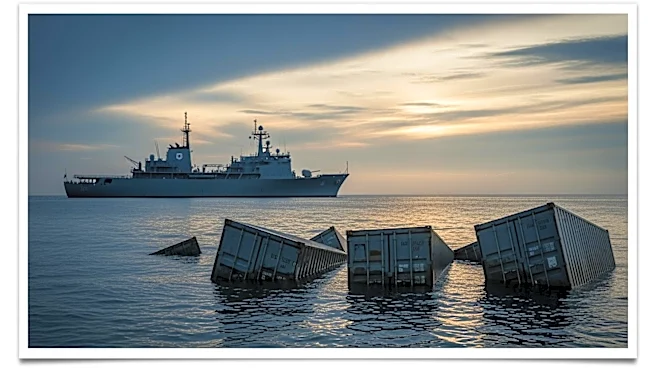
the ceasefire. The blockade is a response to Iran's unlawful mining of the Strait of Hormuz, which has disrupted global maritime trade. The U.S. Central Command clarified that the blockade targets Iranian ports rather than the Strait itself, but the action remains a belligerent act under the laws of war. The blockade's legality and effectiveness are crucial, as it must meet specific criteria to be considered valid under international law.
Why It's Important?
The blockade of Iranian ports has significant implications for global trade and energy markets. The Strait of Hormuz is a critical shipping lane, accounting for 11% of global maritime trade and one-third of all seaborne oil. The U.S. blockade could disrupt oil flows and increase prices, affecting economies worldwide. Additionally, the blockade raises operational risks, as it requires substantial naval resources to be effective. The situation also highlights the need for multinational cooperation in mine clearance operations to restore lawful conditions in the Strait. The blockade's impact on international relations and the legal framework governing global commerce is profound.
What's Next?
The blockade's effectiveness and legality will be tested in the coming days. The U.S. Navy must exert force to render ingress or egress of the blockaded area dangerous, a challenging task given the extensive Iranian coastline. The situation may require support from allies with stronger minesweeping capabilities, such as NATO members and Japan. The blockade's operational realities will determine its legal validity and potential diplomatic repercussions. The international community will closely monitor the situation for signs of escalation or stabilization.
Beyond the Headlines
The blockade and Iran's mining of the Strait of Hormuz represent a significant violation of international law. Iran's actions have created a humanitarian and environmental hazard that it cannot undo, compounding its legal exposure. The blockade's impact on transit passage rights and the legal architecture governing global commerce is profound. The situation underscores the importance of maintaining free and open passage through international straits, a right enjoyed by all nations under international law.