







What's Happening?
New research, led by the Food Systems Countdown Initiative and published in Nature Food, reveals that global progress towards sustainable and resilient food systems is not advancing quickly enough to meet internationally agreed-upon deadlines. The study
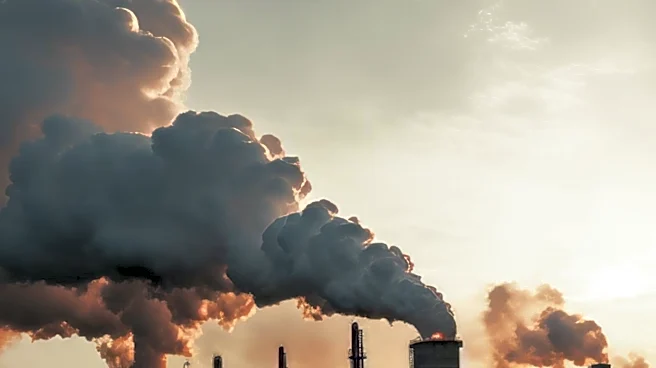
indicates that it is now virtually impossible to achieve most of the United Nations' Sustainable Development Goals (SDGs) related to hunger and poverty, as well as net-zero emissions targets from the Paris Agreement, by the 2030 deadline. The report, which includes an interactive dashboard tracking approximately 50 metrics across nearly every country, highlights that agri-food system emissions are trending upwards globally. Bianca Carducci, lead author of the paper, stated that to reach net-zero agri-food emissions by 2030, every region would need to increase its progress by about 70 percent annually, a movement she deems highly improbable.
Why It's Important?
This research carries significant implications for global policy and the U.S.'s role in international climate and development efforts. The failure to meet these critical 2030 targets could exacerbate food insecurity, environmental degradation, and climate change impacts worldwide, potentially leading to increased humanitarian crises and geopolitical instability. For the U.S., this means a greater burden in terms of foreign aid, disaster relief, and potentially increased migration pressures. Domestically, the findings underscore the need for more aggressive strategies in sustainable agriculture and food production to mitigate environmental impact and ensure long-term food security. The report challenges the efficacy of current global strategies and calls for a re-evaluation of approaches to achieve these vital goals, affecting industries from agriculture to energy and public health.
What's Next?
While the 2030 deadline appears unattainable for many goals, researchers like Carducci emphasize that this should not lead to complacency. The focus should shift towards designing realistic pathways and building in accountability measures, rather than abandoning efforts. The report suggests that a 2050 deadline offers a more achievable timeline for meeting a majority of nutrition and environmental goals. Stakeholders, including governments, international organizations, and civil society groups, are expected to re-evaluate their strategies and potentially adjust timelines and resource allocation. The Food Systems Countdown Initiative plans a webinar to help the public understand the datasets, which could foster greater public engagement and pressure for action. The interconnectedness of various metrics, such as greenhouse gas emissions and civil society participation, suggests that holistic approaches will be crucial for any future progress.
Beyond the Headlines
The report's findings highlight a deeper issue regarding the setting and pursuit of ambitious global targets. The concept of 'deadlines' can sometimes obscure the continuous effort required for systemic change, potentially leading to either a false sense of security or demoralization when targets are missed. The analysis by Michael Puma, a professor at Columbia University's Climate School, suggests that overly ambitious cutoffs might incentivize short-term fixes that lack long-term sustainability. This raises ethical questions about how international bodies and national governments communicate progress and setbacks to the public, and how to maintain momentum for critical issues like climate change and food security without fostering cynicism. The report implicitly calls for a more nuanced understanding of progress, acknowledging that incremental gains, even if they don't meet arbitrary deadlines, are still valuable and necessary.