



What's Happening?
In South Africa, a significant legal decision has been made regarding the country's energy sector. Eskom, the state-owned electricity provider, attempted to block a solar project by Sibanye Stillwater, South Africa's largest gold producer. The project involved
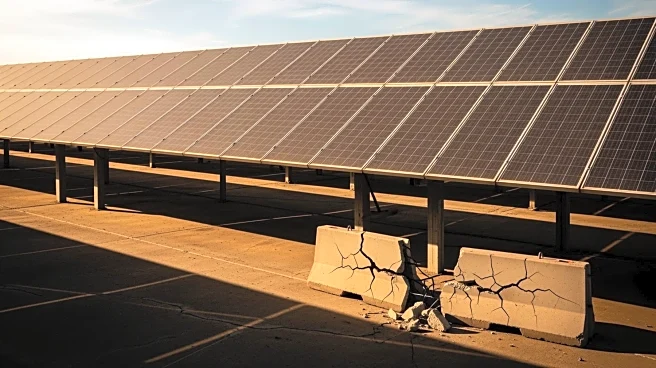
building a 50MW solar photovoltaic plant to power one of its mines, which would have reduced the mine's reliance on the national electricity grid. Eskom refused to allow the mine's solar power lines to cross its servitude, citing regulatory and operational risks. However, the Gauteng Division of the High Court ruled against Eskom, allowing the solar project to proceed. This decision is seen as a victory for renewable energy advocates and highlights the challenges faced by traditional energy monopolies in adapting to new energy policies.
Why It's Important?
This court ruling is pivotal for South Africa's energy transition, as it underscores the legal support for renewable energy projects. By allowing the solar project to proceed, the court has set a precedent that could encourage more private investments in renewable energy. This is crucial for reducing the country's reliance on coal, which currently accounts for 74% of its electricity generation. The decision also highlights the tension between state-controlled energy monopolies and the push for decentralized, private renewable energy generation. As more companies seek to generate their own power, this could lead to a significant shift in the energy market, potentially reducing greenhouse gas emissions and alleviating pressure on the national grid.
What's Next?
Following the court's decision, Sibanye Stillwater can now proceed with its solar project, which is expected to reduce its operational costs and environmental impact. This ruling may also encourage other companies to pursue similar renewable energy projects, potentially leading to a broader shift in South Africa's energy landscape. Eskom, facing declining revenue as more companies generate their own power, may need to adapt its business model to remain viable. The decision could also prompt further legal and policy reforms to support the country's energy transition, ensuring that renewable energy projects are not hindered by bureaucratic obstacles.
Beyond the Headlines
The case highlights the broader implications of energy policy and legal frameworks in supporting or hindering the transition to renewable energy. It raises questions about the role of state-owned enterprises in a rapidly changing energy market and the need for legal systems to adapt to new technological and environmental realities. The ruling also emphasizes the importance of the rule of law in ensuring that energy transitions are not only policy goals but also legally enforceable commitments. This could have long-term impacts on how energy projects are developed and financed in South Africa and potentially in other countries facing similar challenges.