


What's Happening?
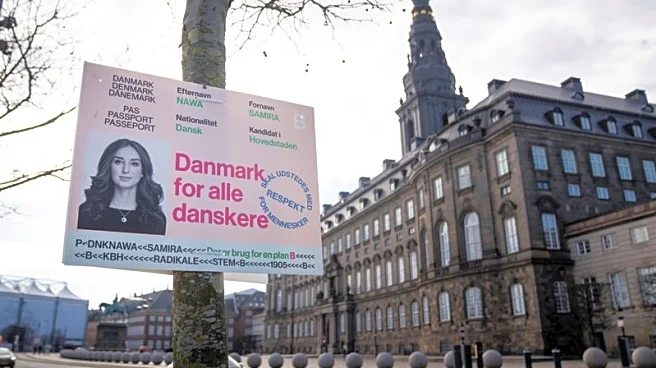
Denmark's recent election concluded with inconclusive results, leaving the future of Prime Minister Mette Frederiksen uncertain. The election, which focused on domestic issues rather than international concerns such as President Trump's interest in Greenland,
saw Frederiksen's center-left Social Democrats lose ground. Neither the left-leaning nor right-leaning blocs secured a majority in parliament, positioning Foreign Minister Lars Løkke Rasmussen as a potential kingmaker. Frederiksen expressed her willingness to continue as prime minister, emphasizing the need for a stable government amidst global uncertainties.
Why It's Important?
The election results in Denmark are significant as they reflect the challenges of forming a stable government in a politically divided landscape. The outcome could impact Denmark's domestic policies and its role within the European Union and NATO. Frederiksen's leadership has been marked by strong support for Ukraine and a restrictive migration policy, both of which could be influenced by the new political dynamics. The situation also highlights the complexities of coalition politics in Denmark, where proportional representation often leads to intricate negotiations.
What's Next?
With no clear majority, Denmark faces a period of political negotiation as parties attempt to form a coalition government. Foreign Minister Lars Løkke Rasmussen's role as a potential kingmaker will be crucial in determining the composition of the new government. The Social Democrats, despite being the largest party, will need to engage in discussions with other parties to secure a governing majority. The political uncertainty may affect Denmark's ability to address pressing issues such as economic stability and international relations.