

What's Happening?
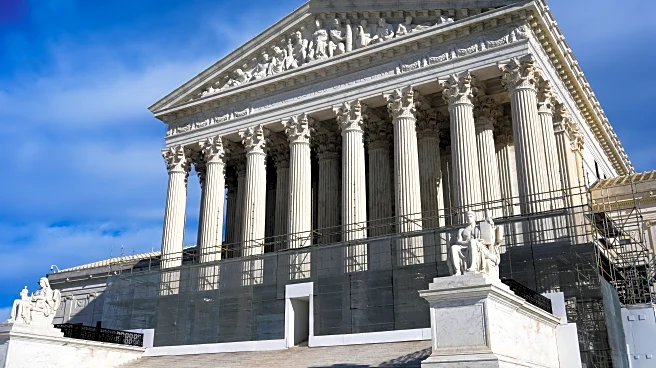
The European Union has paused the ratification of its trade deal with the United States following President Trump's announcement of a 15% global tariff on imports. This decision comes after the U.S. Supreme Court invalidated Trump's use of emergency powers
to impose new import taxes, prompting him to rely on a different legal authority to justify the tariff. The EU is seeking clarity on how this new tariff will affect the trade agreement, which initially set a 15% cap on tariffs for most European goods and aimed to reduce tariffs on U.S. industrial goods to zero. The new tariff, effective immediately, exceeds the agreed ceiling, causing concern among European officials and businesses. The uncertainty surrounding the tariff's impact has led to the postponement of a committee vote on the trade deal's ratification.
Why It's Important?
The imposition of a 15% global tariff by President Trump has significant implications for both U.S. and European economies. For the U.S., the tariff could lead to increased costs for consumers and businesses that rely on imported goods, potentially slowing economic growth. European companies face uncertainty, which could disrupt trade and investment plans. The tariff also affects other bilateral trade agreements with countries like Brazil, India, and the UK, which were negotiated under the threat of now-invalidated tariffs. The situation underscores the volatility in U.S. trade policy, which could have long-term effects on global trade dynamics and economic stability.
What's Next?
The new tariffs are set to last for 150 days unless Congress decides to extend them. During this period, President Trump may seek alternative legal provisions to maintain the tariffs. The EU and other affected countries are likely to push for negotiations to clarify and potentially renegotiate trade terms. The ongoing uncertainty may prompt businesses to adjust their strategies, potentially leading to shifts in supply chains and investment decisions. The U.S. Congress and international trade partners will be closely monitoring the situation, as any changes could have widespread economic repercussions.