
What's Happening?
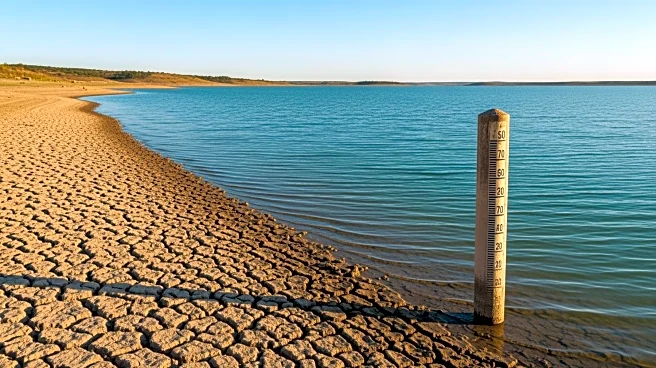
Lake Mead, a crucial reservoir in the western United States, is facing dangerously low water levels, raising concerns about breaching the 1922 Colorado River Compact. This century-old agreement dictates
water distribution among seven western states. Currently, Lake Mead is only one-third full, with water levels at 1,065.78 feet above sea level, significantly below its full capacity. The Upper Basin states, including Colorado, Wyoming, Utah, and New Mexico, are required to deliver a rolling average of 75 million acre-feet of water over ten years to the Lower Basin states, which include California, Arizona, and Nevada. However, ongoing depletion and unresolved disputes over river operations threaten these obligations. The U.S. Bureau of Reclamation, which manages Lake Mead, has been contacted for comment as officials warn that failure to reach a new agreement could lead to federal intervention.
Why It's Important?
The potential breach of the Colorado River Compact could have significant implications for water management and distribution in the western United States. The agreement has been a cornerstone of water policy for over a century, and its disruption could lead to legal and political challenges among the states involved. The ongoing drought and climate change exacerbate the situation, highlighting the need for sustainable water management practices. The states relying on the Colorado River for water supply could face severe shortages, impacting agriculture, industry, and residential water use. The situation underscores the urgency of addressing water scarcity and developing long-term solutions to ensure water security in the region.
What's Next?
With existing operating guidelines for Lakes Mead and Powell set to expire at the end of the year, stakeholders must negotiate a new agreement to prevent federal intervention. The potential for a compact violation looms if a consensus is not reached. Experts caution that even a strong snow year may not reverse the long-term declines caused by overuse and warming temperatures. The future of the Colorado River system and its legal framework remains uncertain, necessitating collaborative efforts among the states to address the challenges posed by water scarcity and climate change.