


What's Happening?
U.S. Rep. Ed Case has publicly supported President Donald Trump’s decision to extend a waiver of the Jones Act for an additional 90 days. This extension, effective from November 16, 2026, to February 14, 2027, aims to safeguard Hawaii’s fuel supply and
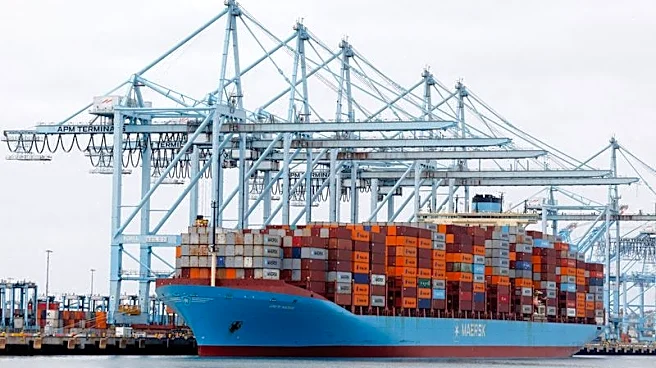
mitigate the impact of global shipping disruptions. The waiver permits certain foreign-flagged vessels to transport fuel and other specified commodities between U.S. ports, though individual voyages still require case-by-case approval. Representative Case emphasized the critical importance of this extension for Hawaii and other noncontiguous U.S. jurisdictions, which heavily depend on external sources for essential commodities like fuel. He had previously urged President Trump for this extension, highlighting that shipping contracts are often secured well in advance, and any uncertainty regarding the waiver's continuation could lead to shipping disruptions and increased costs. The Jones Act, enacted in 1920, mandates that goods transported between U.S. ports must be carried on U.S.-built, U.S.-owned, and U.S.-crewed vessels. The administration initially issued the waiver in March 2026 due to disruptions from the Iran war, and the current extension maintains the case-by-case approval process established in August. The White House reported that the waiver has facilitated the movement of an additional 90 million barrels of petroleum between U.S. ports since March.
Why It's Important?
This extension of the Jones Act waiver is crucial for maintaining energy security and economic stability in Hawaii and other noncontiguous U.S. territories. These regions face unique logistical challenges and higher reliance on imported goods, making them particularly vulnerable to global shipping disruptions and increased costs. By allowing foreign-flagged vessels to transport fuel, the waiver helps to diversify shipping options, prevent supply chain bottlenecks, and stabilize energy prices for consumers and businesses. Without such a waiver, the strict requirements of the Jones Act could lead to higher transportation costs, limited availability of essential goods, and potential economic strain on these isolated communities. The proactive extension also provides predictability for shipping companies and suppliers, enabling them to plan logistics and contracts without the uncertainty of an expiring waiver. This measure underscores the federal government's recognition of the distinct economic and logistical needs of noncontiguous states and territories, ensuring their access to vital resources amidst ongoing international market volatility.
What's Next?
The extended waiver will remain in effect until February 14, 2027, providing a temporary but critical relief period for Hawaii's fuel supply chain. As the expiration date approaches, stakeholders, including U.S. Rep. Ed Case and other representatives from noncontiguous jurisdictions, will likely monitor global shipping conditions and energy markets closely. Discussions regarding further extensions or alternative long-term solutions to address the unique shipping challenges faced by these regions may arise. The ongoing war with Iran and its impact on international oil and shipping markets will be a significant factor influencing future decisions. The case-by-case approval process for individual voyages under the waiver will continue, ensuring that each request is evaluated based on current needs and market conditions. Businesses and consumers in Hawaii will benefit from continued stability in fuel supply and pricing during this period, but the long-term implications of relying on such waivers for essential commodities will likely prompt broader policy discussions.
Beyond the Headlines
The recurring need for Jones Act waivers highlights a deeper tension between national maritime policy and the economic realities of geographically isolated U.S. regions. While the Jones Act aims to support the domestic maritime industry and national security, its stringent requirements can inadvertently create economic vulnerabilities for states like Hawaii, which are heavily dependent on sea-borne trade. This situation prompts questions about the long-term sustainability of current maritime regulations in a globalized and often volatile shipping environment. It also underscores the broader debate on how to balance national economic protectionism with the specific needs of diverse U.S. regions. The reliance on waivers, while practical in the short term, may also signal a need for a more comprehensive review of maritime policies to ensure they adequately serve all parts of the nation without disproportionately burdening certain populations or industries. This ongoing discussion could lead to legislative efforts to reform or adapt the Jones Act to better accommodate modern supply chain complexities and regional economic disparities.