



What's Happening?
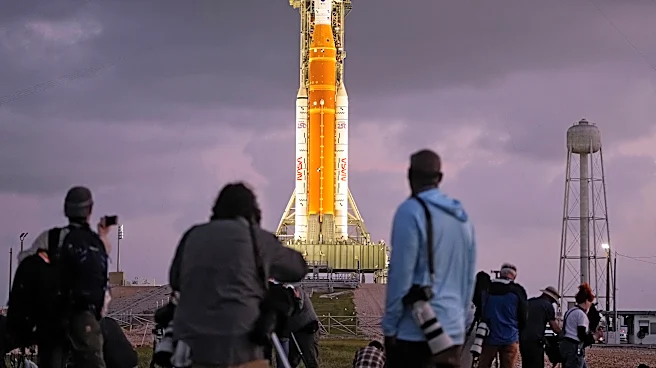
NASA has launched Artemis II, its first manned mission to the moon in over 50 years, on April 1, 2026. The mission, which took off from Florida's Kennedy Space Center, involves a 10-day flyby of the moon using the Orion spacecraft. This mission is a significant
step in NASA's plan to establish a permanent settlement on the moon. The Artemis II mission is being closely followed by the public, with many using NASA's Artemis Real-time Orbit Website (AROW) to track the spacecraft's progress. The mission tracker provides real-time data on the spacecraft's location, velocity, and distance from Earth, offering a virtual view of the mission.
Why It's Important?
The Artemis II mission marks a pivotal moment in space exploration, as it is the first manned mission to the moon since the 1970s. This mission is crucial for NASA's long-term goal of establishing a sustainable human presence on the moon, which could serve as a stepping stone for future missions to Mars. The success of Artemis II could have significant implications for international space collaboration and inspire advancements in space technology. Additionally, the mission's progress is being made accessible to the public through NASA's online tools, fostering greater public engagement and interest in space exploration.
What's Next?
Following the successful completion of the Artemis II mission, NASA plans to continue its Artemis program with subsequent missions aimed at establishing a lunar base. The data and experience gained from Artemis II will inform the planning and execution of these future missions. Stakeholders, including international space agencies and private space companies, are likely to closely monitor the outcomes of Artemis II to align their own lunar exploration strategies. Public interest and support for space exploration may also influence future funding and policy decisions related to NASA's lunar ambitions.