





What's Happening?
Franita Tolson's new book, 'In Congress We Trust? Enforcing Voting Rights from the Founding to the Jim Crow Era,' explores the historical extent of Congress's power over elections, challenging the prevailing narrative that states hold primary control.
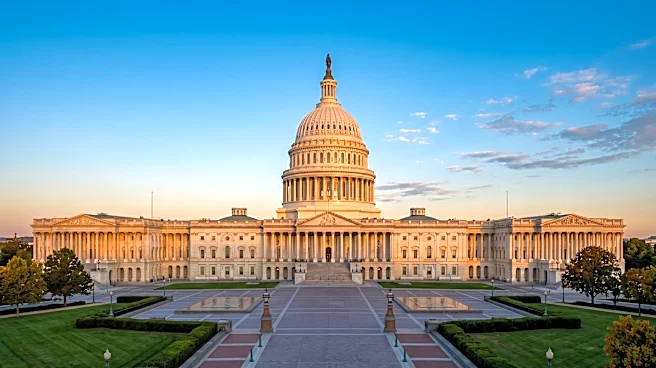
Tolson argues that while much of the U.S. election system is regulated at the state level, the U.S. Constitution grants significant authority to Congress through provisions such as the Elections Clause, which permits Congress to 'make or alter' state regulations governing congressional elections. Other provisions include the Guarantee Clause, requiring the U.S. to guarantee every state a republican form of government, and Article I, Section 5, which makes each house of Congress the judge of the elections and returns of its own members. Additionally, Section 2 of the Fourteenth Amendment requires Congress to reduce a state’s congressional representation when the state improperly denies or abridges the right to vote. Tolson highlights historical instances, such as the case of Charles Miller Shelley after Reconstruction, where the House of Representatives used its structural power under Article I, Section 5, to address racial discrimination in voting, even when other avenues were foreclosed by Supreme Court decisions.
Why It's Important?
Tolson's research is significant because it disrupts the federalism narrative often advanced by the Supreme Court, which suggests that states have primary control over elections and voter qualifications. By showcasing Congress's historical exercise of power over elections, the book provides a counter-narrative that could influence contemporary debates about federal election laws and voting rights. At a time when the Supreme Court has increasingly narrowed federal voting-rights protections, understanding the historical scope of congressional authority becomes crucial. This perspective could empower arguments for greater federal intervention in election administration and voter protection, potentially leading to new legislative efforts to safeguard voting rights. It also sheds light on the dynamic interplay between federal and state powers, and the judiciary's role in interpreting these powers, impacting how future election disputes and reforms are approached.
What's Next?
The insights from Tolson's book could fuel ongoing discussions and potential legislative actions regarding federal oversight of elections. Advocates for stronger federal voting rights protections may leverage this historical analysis to push for new laws or to defend existing ones against challenges. Conversely, those who champion state control over elections may need to re-evaluate their arguments in light of the historical evidence presented. The book's findings could also influence judicial interpretations of congressional power in future election-related cases, potentially leading to a re-examination of the balance between federal and state authority. The debate over election integrity and accessibility is likely to continue, with Tolson's work providing a deeper historical and constitutional foundation for understanding Congress's role.
Beyond the Headlines
Tolson's work delves into the foundational principles of American democracy, particularly the complex and often contentious relationship between federal and state authority in governing elections. By categorizing constitutional provisions into a 'Constitution of Political Structure' and a 'Constitution of Political Rights,' she offers a new framework for understanding how governmental authority over the political system has been allocated and structured. This intellectual reframing challenges modern constitutional doctrine, which often obscures the historical reality of Congress drawing from multiple sources of constitutional authority simultaneously. The book's exploration of how Congress adapted its understanding of federal power during critical moments, such as the Civil War and Reconstruction, highlights the evolving nature of constitutional interpretation and the practical application of governmental powers in response to societal challenges. This deeper understanding of historical precedents can inform contemporary discussions about the resilience and adaptability of the U.S. electoral system.