






What's Happening?
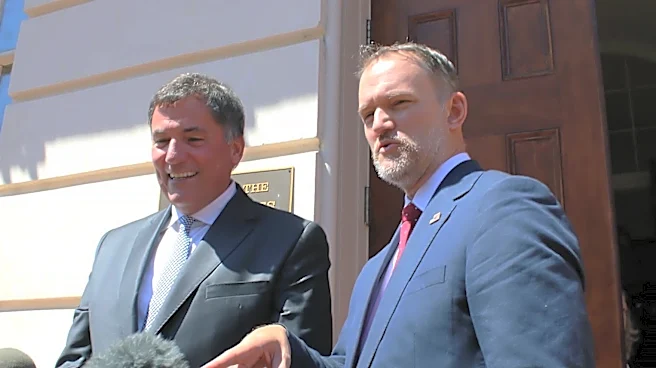
Elbridge Colby, the U.S. Undersecretary of Defense for Policy, has issued a strong caution against the formation of exclusive 'middle-power alliances' that aim to exclude the United States. Speaking in Manila on August 10, Colby urged regional partners
to increase their defense spending and align more closely with American priorities. He emphasized that Washington seeks 'partners, not protectorates,' and dismissed the concept of middle-power alliances as a 'delusion' based on a 'faulty understanding' of international relations. Colby reiterated his stance, previously expressed in mid-July and in a New York Times interview, that such strategies risk allies 'wasting valuable time, money and political capital on a distraction.' He also underscored that access to the U.S. defense industrial base is 'a privilege, not a right.' These remarks have intensified discussions among U.S. allies regarding how to navigate their dependence on Washington during the Trump administration without shifting towards Beijing.
Why It's Important?
Colby's statements highlight a significant tension within U.S. foreign policy and its relationships with allies, particularly in the context of global power dynamics. The U.S. is signaling its expectation for allies to contribute more to their own defense and to maintain alignment with American strategic interests. This stance could influence defense spending decisions and strategic partnerships across various nations, potentially leading to increased military expenditures by U.S. allies. The warning against exclusive middle-power alliances underscores the U.S.'s desire to remain central to global security frameworks and to prevent the emergence of blocs that could challenge its influence. For U.S. allies, this creates a delicate balancing act: seeking greater autonomy and reducing dependence on Washington, while simultaneously avoiding actions that could be perceived as undermining the U.S. security umbrella or pushing them closer to rivals like China. The emphasis on the 'privilege' of accessing the U.S. defense industrial base also suggests potential implications for military technology transfers and defense cooperation agreements.
What's Next?
The debate sparked by Colby's remarks is likely to continue shaping discussions among U.S. allies regarding their defense strategies and international alignments. Nations that have been exploring middle-power cooperation may need to re-evaluate their approaches to ensure they do not alienate the U.S. or jeopardize their access to critical American defense resources. There could be increased pressure on these allies to demonstrate their commitment to U.S. priorities through higher defense spending and closer strategic coordination. The upcoming visit of Chinese leader Xi Jinping to the White House, mentioned in the source, suggests that U.S.-China relations will remain a central theme, further influencing how U.S. allies position themselves. The U.S. administration may continue to articulate its expectations for allies, potentially leading to more explicit policy directives or conditions related to defense cooperation and access to U.S. military capabilities.
Beyond the Headlines
Beyond the immediate policy implications, Colby's comments reflect a broader philosophical shift in how the U.S. views its alliances, particularly under the Trump administration. The emphasis on 'partners, not protectorates' suggests a move towards a more transactional and burden-sharing approach, where allies are expected to contribute more tangibly to collective security. This could lead to a redefinition of traditional alliance structures and responsibilities. The warning against 'delusion' in international relations also hints at a more pragmatic and perhaps less idealistic view of global cooperation from the U.S. perspective. This shift could have long-term consequences for multilateral institutions and the global order, potentially fostering a more competitive environment where nations are increasingly compelled to choose sides or demonstrate clear alignment. The underlying message is that U.S. support and resources are not guaranteed and are contingent on alignment with American strategic interests, potentially reshaping the geopolitical landscape for decades to come.