


What's Happening?
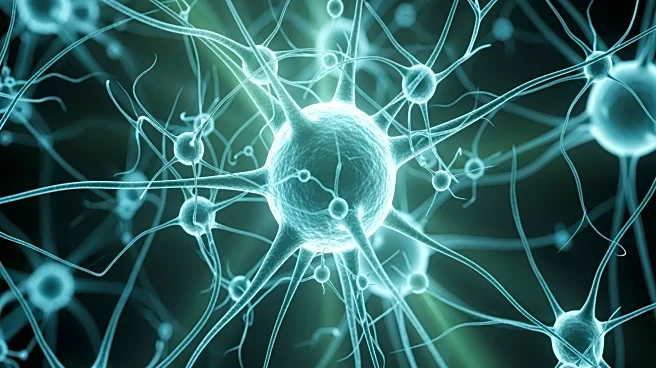
Researchers at the University of Pennsylvania have discovered that exercise not only strengthens muscles but also rewires the brain to enhance endurance. The study, conducted on mice, found that repeated exercise leads to changes in brain activity, particularly
in the ventromedial hypothalamus (VMH), which helps muscles and the heart become stronger. The research identified a group of neurons, known as SF1 neurons, that become active during and after exercise, contributing to improved endurance. Blocking these neurons' activity prevented endurance gains, highlighting their crucial role in the body's adaptation to exercise.
Why It's Important?
This research provides new insights into how exercise affects the brain and its role in enhancing physical endurance. Understanding the brain's involvement in exercise adaptation could lead to new strategies for improving physical performance and recovery. The findings suggest potential applications in developing exercise mimetics to help individuals who cannot engage in regular physical activity, such as older adults or those recovering from injuries. This could revolutionize approaches to physical rehabilitation and fitness, encouraging more people to engage in exercise by demonstrating quicker and more significant benefits.
What's Next?
The study opens avenues for further research into the development of exercise mimetics that activate VMH SF1 neurons or their pathways. Such advancements could enhance endurance and metabolic function in populations unable to participate in regular exercise. Researchers aim to explore how these findings can be applied to human health, potentially leading to new treatments for improving physical fitness and recovery in various populations.