


What's Happening?
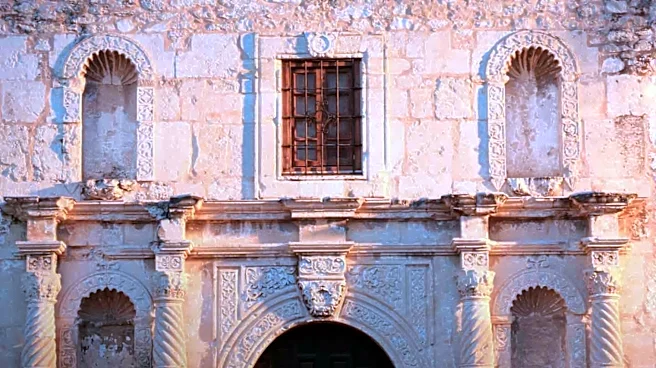
Four individuals—Jacob Miller, Theodore Raymond, Michelle Martens, and Tristan Diller—were arrested on August 15 near the Alamo in San Antonio, Texas, on criminal trespass charges. The arrests occurred during an anti-abortion demonstration after authorities,
specifically the Texas Department of Public Safety (DPS), issued multiple warnings that were not complied with. C.J. Grisham, an attorney representing the four, stated that his clients were exercising their First Amendment rights and disputed the legality of the arrests. The individuals were released on Sunday morning after approximately a day in jail and are facing Class B misdemeanor criminal trespass charges. Grisham has expressed his expectation that the charges will be dismissed and has challenged the restrictions governing demonstrations and expressive activity at the Alamo.
Why It's Important?
This incident highlights the ongoing tension between public assembly rights and property regulations, particularly in historically significant and publicly accessible areas like the Alamo. The arrests raise questions about the scope of First Amendment protections in such locations and the discretion of law enforcement in enforcing trespass laws during protests. For anti-abortion advocates, this event could be seen as an infringement on their right to free speech, potentially galvanizing further activism and legal challenges against demonstration restrictions. Conversely, authorities may view their actions as necessary to maintain order and protect public property. The outcome of the legal challenge to the charges and the regulations at the Alamo could set precedents for future demonstrations and the balance between public access and site management in other historical landmarks across the U.S.
What's Next?
The attorney for the arrested individuals, C.J. Grisham, expects the criminal trespass charges to be dismissed and plans to challenge the existing restrictions on demonstrations and expressive activity at the Alamo. This indicates a potential legal battle that could clarify the boundaries of free speech in public spaces, especially those with historical significance. The outcome of this challenge could influence how similar protests are managed in the future, not only in San Antonio but potentially in other cities with prominent historical sites. Stakeholders, including civil liberties groups, local government, and law enforcement, will likely monitor the legal proceedings closely, as the decision could impact public policy regarding demonstrations and the use of public spaces for advocacy.
Beyond the Headlines
The arrests near the Alamo during an anti-abortion demonstration delve into the complex interplay between historical preservation, public access, and constitutional rights. The Alamo, a symbol of Texas independence, is a site of immense historical and cultural significance, making any restrictions on public expression there particularly sensitive. This incident could spark broader discussions about how historical sites balance their role as educational and commemorative spaces with their function as public forums. It also touches upon the ongoing national debate surrounding abortion rights, where demonstrations often become flashpoints for legal and social contention. The legal challenge to the demonstration restrictions could lead to a re-evaluation of policies governing public assembly at national and state landmarks, potentially influencing how future protests are permitted and managed in sensitive historical contexts across the U.S.