







What's Happening?
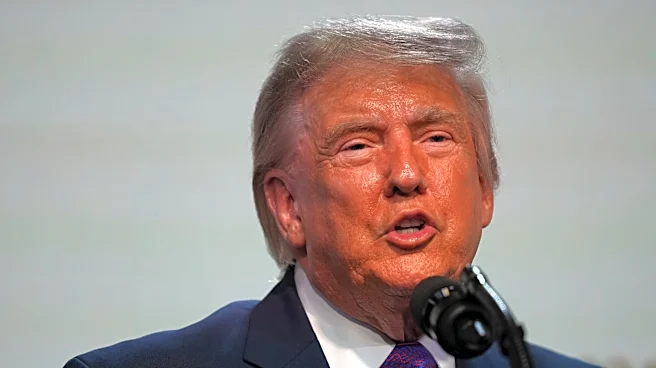
The U.S. Senate has voted to advance a war powers resolution aimed at requiring President Trump to obtain congressional authorization to continue military operations in Iran. The resolution passed with a 50-47 vote, marking the first successful advancement
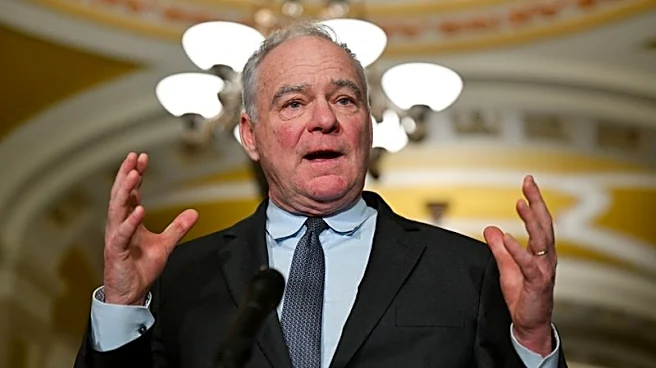
of such a bill after eight attempts since the conflict began in February. Notably, four Republican senators, including Bill Cassidy, Lisa Murkowski, Rand Paul, and Susan Collins, joined the majority of Democrats in supporting the measure. The resolution's sponsor, Senator Tim Kaine of Virginia, emphasized the need for a thorough discussion on the war's rationale, strategy, and costs. Despite the advancement, the resolution faces a likely veto from President Trump, even if it passes both the Senate and the House.
Why It's Important?
The advancement of this resolution is significant as it represents a growing bipartisan concern over the executive branch's unilateral military actions without congressional approval. The resolution seeks to reassert congressional authority over war powers, a critical check on presidential power. The involvement of Republican senators indicates a shift in the political landscape, as some members of President Trump's party are beginning to question the administration's approach to the conflict in Iran. This development could influence future U.S. foreign policy decisions and the balance of power between the legislative and executive branches. The resolution also highlights the broader debate over the U.S.'s role in international conflicts and the need for clear objectives and legal authority in military engagements.
What's Next?
The resolution's passage in the Senate is just the initial step toward full legislative approval. It must still pass in the House of Representatives, where it may face additional challenges. If it succeeds, President Trump is expected to veto the resolution, setting the stage for a potential override attempt by Congress. The outcome of this legislative process will be closely watched, as it could set a precedent for future congressional actions on war powers. Additionally, the resolution's progress may prompt further discussions among lawmakers and the public about the U.S.'s military strategy and the importance of congressional oversight in matters of war.