







What's Happening?
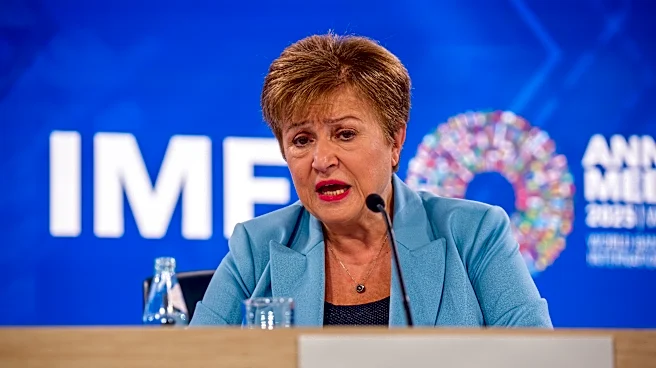
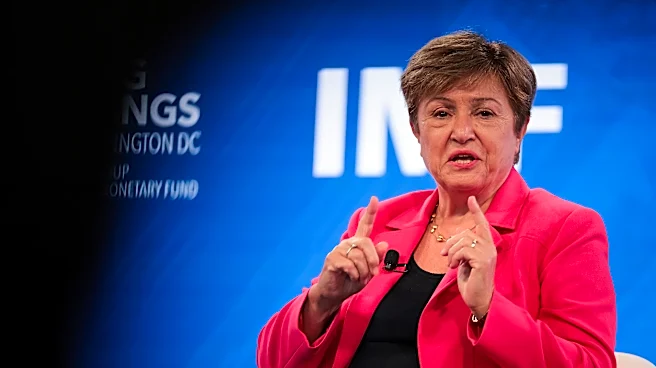
On November 13, 2026, the International Monetary Fund (IMF) released its concluding statement regarding the Finnish economy. The IMF noted that while the Finnish economy has shown strengthened recovery in 2026, unemployment levels remain elevated. The report
projects that inflation is expected to moderate towards 2% in 2027. However, the IMF also highlighted that risks to the growth outlook are tilted to the downside. As part of its regular monitoring of member countries, IMF staff conduct annual visits and extensive meetings with various stakeholders to assess economic health. The concluding statement presents the preliminary findings from these Article IV consultations, with a final report to be published at a later date. The IMF's assessment is based on discussions with Finnish authorities, social partners, private financial institutions, and research institutes.
Why It's Important?
The IMF's assessment of the Finnish economy is significant as it provides an independent evaluation of the country's economic health and policy direction. For the U.S., such international economic reports offer insights into global economic trends and potential ripple effects. A strong or weak Finnish economy can influence trade relations, investment flows, and overall European stability, which indirectly impacts U.S. economic interests. The IMF's recommendations for Finland to consolidate public finances, increase employment, and improve education underscore common economic challenges faced by developed nations. The identified risks, such as a weak housing market and elevated household indebtedness, serve as cautionary indicators that could be relevant for other economies, including the U.S., in managing their own financial stability and growth strategies. The resilience of Finland's banking sector, despite these concerns, also offers a point of comparison for financial regulators globally.
What's Next?
Following the release of the preliminary concluding statement, a final report on Finland's economy will be published by the IMF at a later date. The Finnish authorities are expected to consider the IMF's recommendations, which include focusing on consolidating public finances, increasing employment, and improving education. Continued vigilance regarding the weak housing market and elevated household indebtedness will also be crucial for Finland's economic stability. The IMF's ongoing monitoring process will track Finland's progress in addressing these areas. The insights from this report may also inform policy discussions within the European Union, potentially influencing broader economic strategies that could have indirect implications for U.S. economic partners and global markets.
Beyond the Headlines
The IMF's concluding statement on Finland extends beyond immediate economic indicators, touching upon the broader implications of sustained high unemployment and the need for educational improvements. These recommendations highlight the long-term structural challenges many advanced economies face in maintaining competitive workforces and ensuring inclusive growth. The emphasis on public finance consolidation also points to the global trend of managing national debt while stimulating economic activity. For the U.S., these observations resonate with ongoing debates about fiscal responsibility, labor market dynamics, and educational reform. The IMF's role in providing these assessments underscores the interconnectedness of the global economy, where the economic health and policy choices of one nation can offer valuable lessons and warnings for others, influencing international economic cooperation and policy coordination.