



What's Happening?
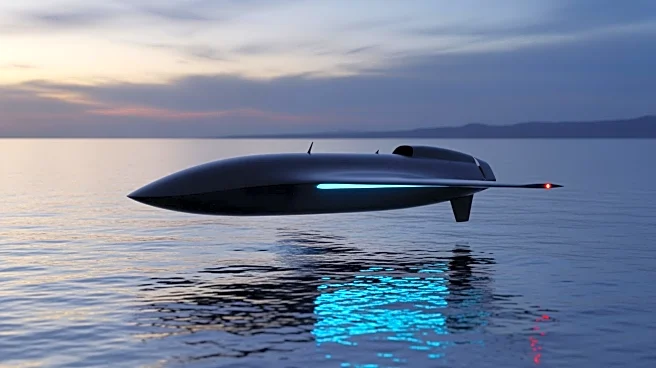
An unmanned surface vessel, manufactured by U.S. defense contractor Sierra Nevada Corporation, washed ashore on Turkey's Black Sea coast on March 20, 2026. The vessel, identified as an AEGIR-W variant, was discovered by locals in the Yüceler neighborhood
of Ünye district in Ordu province. Turkish Navy explosive ordnance disposal specialists conducted a technical inspection and found the vessel operational with an active warhead. Due to the assessed risk, authorities decided to tow the vessel approximately four kilometers offshore and destroy it in a controlled detonation. The AEGIR-W is designed for high-threat maritime environments, capable of autonomous or human-operated missions, and is part of a family of vessels used for intelligence, surveillance, and offensive operations.
Why It's Important?
The incident highlights the increasing presence and risks associated with unmanned maritime systems in the Black Sea, a region that has seen heightened activity since Russia's full-scale invasion of Ukraine in 2022. The discovery of a U.S.-made drone in Turkish waters underscores the complex geopolitical dynamics and the potential for international incidents involving military technology. The situation raises questions about the control and tracking of such advanced military equipment, as well as the protocols for dealing with foreign military assets in national waters. This event could influence future maritime security policies and international cooperation in the region.
What's Next?
The incident may prompt discussions between Turkey and the United States regarding the presence of foreign military technology in Turkish waters. It could also lead to increased surveillance and security measures along the Black Sea coast to prevent similar occurrences. Additionally, there may be calls for enhanced international regulations and agreements on the deployment and recovery of unmanned military systems to prevent potential conflicts and ensure regional stability.