
What's Happening?
In Portland's Hazelwood neighborhood, a 12-hour standoff concluded with the arrest of Bennie D. Miller IV, who was charged with multiple offenses including coercion and unlawful use of a weapon. The incident
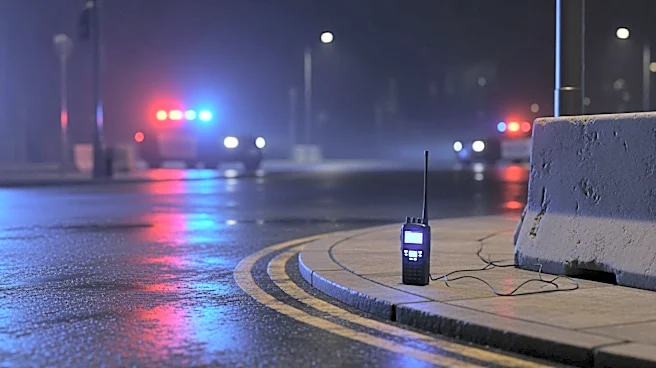
began early Friday morning when police responded to reports of an armed individual holding a woman hostage in an apartment. The police established a safety perimeter and closed Northeast 122nd Avenue, advising residents to shelter in place. The female victim was safely released, but the suspect remained inside, leading to a prolonged negotiation. Despite efforts by the Crisis Negotiation Team, the suspect refused to surrender. Eventually, police used CS gas and other munitions to compel him to exit the building, where he was apprehended by officers and a K-9 unit. The suspect was evaluated by medical services following his arrest.
Why It's Important?
This incident underscores the challenges law enforcement faces in managing domestic violence situations, particularly those involving armed suspects. The standoff disrupted the local community, highlighting the need for effective crisis management and negotiation strategies. The involvement of specialized units like the Crisis Negotiation Team and SWAT demonstrates the complexity and potential danger of such situations. The case also raises concerns about mental health issues, as the suspect reportedly has a history of similar behavior. This incident may prompt discussions on improving mental health support and intervention to prevent such occurrences.
What's Next?
Following the arrest, detectives from the Special Victims Unit are leading the investigation. The suspect's previous interactions with law enforcement are under review, which could lead to additional charges. The community is likely to resume normal activities as the area reopens. This case may influence future law enforcement protocols and mental health intervention strategies. Community leaders and law enforcement agencies might engage in discussions to address the underlying issues that contribute to such incidents, potentially leading to policy changes or new initiatives aimed at prevention.