
What's Happening?
NASA is preparing for the Artemis II mission, scheduled to launch in April 2026. This mission will send a crew of four astronauts on a 10-day lunar flyby, marking the first crewed trip around the Moon since 1972. The mission aims to test crucial systems
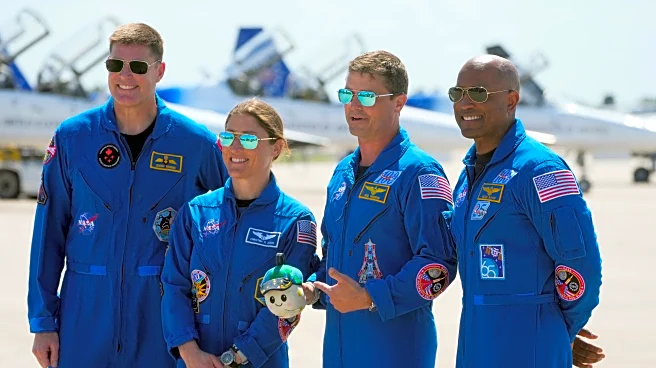
for future deep-space travel without landing on the lunar surface. The crew includes Mission Commander Reid Wiseman, Pilot Victor Glover, Mission Specialist Christina Koch, and Canadian Space Agency astronaut Jeremy Hansen. The mission will utilize NASA's Space Launch System and the Orion spacecraft, designed to withstand the harsh conditions of space travel.
Why It's Important?
The Artemis II mission is a significant step in NASA's efforts to return humans to the Moon and eventually send astronauts to Mars. By testing the systems needed for future Moon landings and deep-space travel, NASA is paving the way for more advanced exploration missions. The mission's success could bolster international collaboration in space exploration and inspire technological advancements in spacecraft design and safety. It also represents a renewed commitment to space exploration, potentially influencing public interest and investment in the space industry.
What's Next?
Following the Artemis II mission, NASA plans to conduct further missions under the Artemis program, including Artemis III, which aims to land astronauts on the lunar surface. The data and experience gained from Artemis II will inform these future missions, helping to refine the technology and strategies needed for sustained human presence on the Moon and beyond. The mission's outcome will likely influence international partnerships and funding for future space exploration initiatives.