


What's Happening?
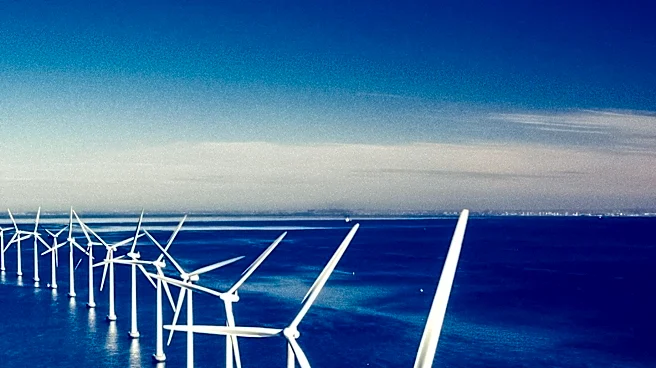
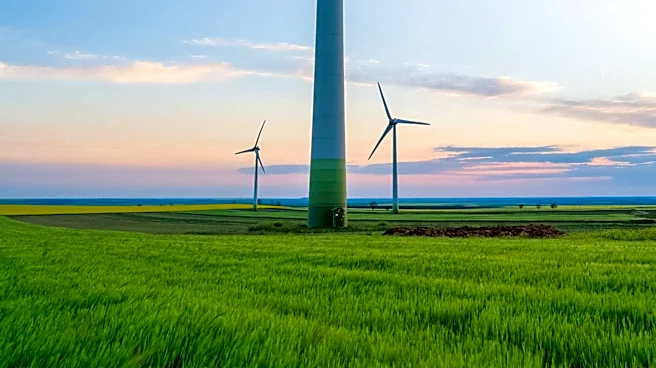
Despite North Dakota ranking ninth in the U.S. for wind energy production and wind farms generating significant economic activity, many residents in areas like Wishek are expressing regret and resentment over the expansion of wind power. The Badger Wind
Farm, a 92-turbine, 250-MW project by Danish energy giant Ørsted, is the newest installation in Wishek, bringing lease payments to landowners and an estimated $1.3 million annually in tax revenues to McIntosh County. However, residents like Larry Wald, former mayor of Wishek, and Lila Raile, whose 'dream home' is now surrounded by turbines, feel the visual impact and changes to the agricultural character outweigh the benefits. McIntosh County has since adopted a one-year moratorium on new wind projects, reflecting a broader reevaluation of commercial-scale clean energy in rural America.
Why It's Important?
This shift in sentiment in North Dakota highlights a growing tension between economic development, environmental goals, and local community concerns regarding renewable energy projects. While wind power offers substantial financial benefits through tax revenues and landowner payments, the perceived disruption to rural landscapes and quality of life can lead to significant local opposition. This situation is critical for the U.S. energy transition, as it demonstrates that even in states with abundant wind resources and a history of embracing an 'all of the above' energy policy, public acceptance is not guaranteed. The moratorium on new projects in McIntosh County could set a precedent for other rural areas, potentially slowing down the national push for clean energy infrastructure and impacting the country's ability to meet decarbonization goals. It also underscores the need for developers and policymakers to engage more effectively with local communities to address their concerns.
What's Next?
The one-year moratorium on new wind projects in McIntosh County will provide a period for local officials and residents to reassess the impact of wind farms and potentially develop more robust planning and zoning regulations. This could lead to stricter siting requirements for future projects, prioritizing visual impact and proximity to non-participating residences. The broader debate in North Dakota, with lawmakers and public officials questioning the state's 'carrying capacity' for wind turbines, suggests a potential slowdown in new wind energy development. The state Public Service Commission's increasing wariness, particularly regarding the impact on the coal industry, indicates that future project approvals will face heightened scrutiny. This could lead to a more cautious approach to renewable energy expansion, potentially favoring traditional energy sources or requiring more integrated energy policies.
Beyond the Headlines
The North Dakota wind power controversy reveals a deeper cultural and political divide within rural America regarding energy policy. The argument that wind power is a 'bad deal' due to its potential impact on the coal industry, championed by figures like Representative Julie Fedorchak and Public Service Commission Chair Randy Christmann, reflects a broader conservative push to protect traditional energy sectors. This narrative often frames wind energy as an external imposition driven by 'outside interests' rather than a local benefit, despite the economic gains for landowners and counties. The conflict also touches on the identity of agricultural communities, where some farmers feel that income not derived from traditional farming is 'not right.' This highlights the challenge of integrating new industries into established rural economies and the importance of respecting local values and heritage in the pursuit of national energy goals.